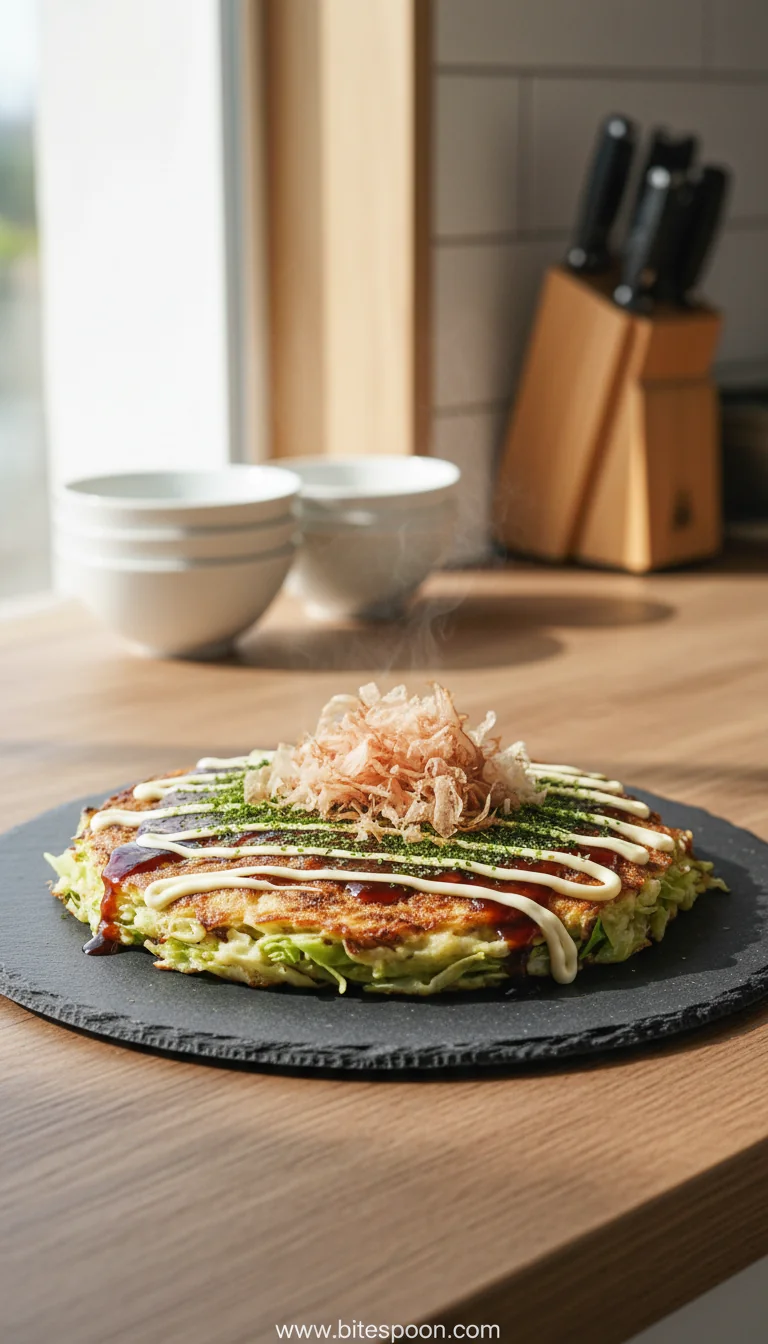
Okonomiyaki originated in Osaka during the early 20th century as a creative way to fill hungry bellies with inexpensive ingredients. The name literally means 'grilled as you like it,' reflecting its customizable nature that has made it a beloved street food across Japan for generations. During post-war periods, it became particularly popular as families sought economical yet nourishing meals using readily available ingredients like cabbage and flour.
Why You'll Love It
-
- Incredibly versatile - you can add whatever proteins or veggies you have on hand
-
- Perfect for using up leftover ingredients hiding in your fridge
-
- The combination of textures creates the most satisfying mouthfeel
-
- Great for family meals where everyone can customize their own pancake
'This recipe turned out even better than the okonomiyaki we had in Tokyo!' - Sarah M.
Essential Ingredient Guide
- Cabbage: Use finely shredded green cabbage - it becomes wonderfully tender and sweet when cooked, adding both moisture and substance to the pancake. Thinly sliced works best so it cooks evenly.
- Okonomiyaki flour: This special flour contains yam starch which gives the pancake its characteristic fluffy texture. If unavailable, mix all-purpose flour with a bit of cornstarch.
- Dashi stock: The subtle umami from dashi is essential for authentic flavor. You can make instant dashi or use vegetable broth as a substitute.
- Eggs: Fresh eggs help bind everything together while adding richness. Room temperature eggs incorporate better into the batter.
- Okonomiyaki sauce: This sweet-savory Worcestershire-like sauce is what makes okonomiyaki distinctive. You can make your own or find it in Asian markets.
- Japanese mayonnaise: Kewpie mayo has a unique tanginess that balances the sauce. Regular mayo works, but the flavor profile will be different.
Complete Cooking Process
-
Ingredient Readiness:
Properly preparing your cabbage and letting the batter rest allows the ingredients to meld together beautifully, creating a more cohesive final product.
-
Flavor Development:
The slow cooking process caramelizes the cabbage edges while allowing the savory notes from the dashi to deepen throughout the pancake.
-
Texture Control:
Cooking over medium heat creates that perfect balance - crispy golden exterior with a fluffy, tender interior that holds together when sliced.
-
Finishing Touches:
The final drizzle of sauces and toppings adds both visual appeal and layers of flavor that make each bite complex and interesting.
-
Serving Timing:
Okonomiyaki is best served piping hot right off the griddle, when the contrast between crispy edges and tender center is most pronounced.
-
Don't overcrowd the pan - give each pancake space to cook evenly
-
Let the batter rest 10 minutes - this hydrates the flour properly
-
Resist flipping too early - wait for the edges to set firmly
-
Use a good non-stick pan or well-seasoned griddle
Pro Tips
You know, the thing about okonomiyaki is that it's really forgiving. Even if your first attempt isn't perfect, it'll still taste wonderful. I remember my first time making it - I was so nervous about flipping, but honestly, even if it breaks a little, you can just patch it back together.
What's beautiful is how the cabbage transforms during cooking. It goes from crunchy and bright to soft and sweet, mingling with the other ingredients in this comforting way. If you're looking for other ways to use cabbage, you might enjoy some simple sautéed cabbage as well.
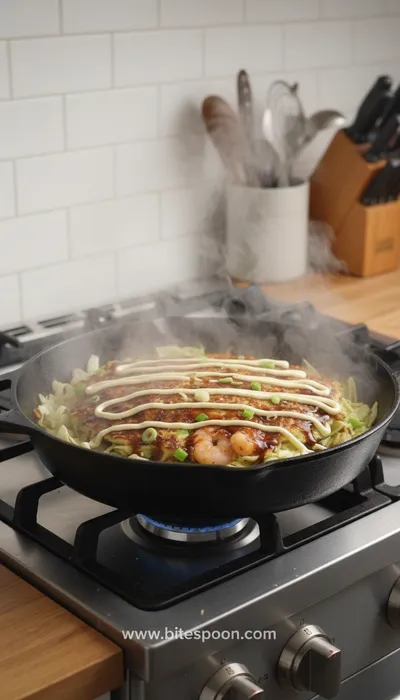
The essence of okonomiyaki:
What makes okonomiyaki special is its beautiful imperfection - no two pancakes are ever exactly alike, reflecting the 'cook as you like' philosophy that celebrates personal taste and creativity.
A fun fact from Osaka:
In Osaka, where okonomiyaki originated, there's an entire district dedicated to these savory pancakes, with restaurants where you cook them yourself on tabletop griddles.
The sensory experience:
You'll notice the satisfying sizzle as the pancake hits the hot surface, the sweet-savory aroma filling your kitchen, and that perfect contrast of crispy edges against the fluffy interior.
You Must Know
-
The batter should be thick but pourable - adjust with more liquid if needed
-
Cabbage must be finely shredded to cook properly
-
Cook over medium heat - too hot burns the outside before inside cooks
-
Let it rest a minute after cooking before cutting
Frequently Asked Questions
→ Can I make okonomiyaki without special flour?
Absolutely. While okonomiyaki flour gives the best texture, you can substitute with all-purpose flour mixed with 1 tablespoon of cornstarch per cup of flour.
→ What's the difference between Osaka and Hiroshima style?
Osaka style mixes all ingredients together, while Hiroshima style layers ingredients with noodles cooked separately. This recipe follows the Osaka method.
→ Can I prepare the batter ahead of time?
You can mix the dry and wet ingredients separately up to a day ahead, but combine them just before cooking for best results.
→ What other veggies work well in okonomiyaki?
Try adding shredded carrots, corn kernels, bean sprouts, or thinly sliced scallions. The beauty is you can use what you have.
→ How do I know when to flip the pancake?
Wait until the edges look set and bubbles form on the surface - usually about 4-5 minutes. The bottom should be golden brown.
→ Can I make it gluten-free?
Yes, use gluten-free flour blend and tamari-based sauces. The texture will be slightly different but still delicious.
Nutrition Facts
per serving
285
Calories
12g
Protein
38g
Carbs
8g
Fat
Taste Profile
Rich savory-sweet balance with pronounced umami from sauces and toppings
Ingredient Substitutions
Don't have an ingredient? Try these alternatives
Mix 1 cup all-purpose flour with 1 tablespoon cornstarch for similar results
Add a splash of soy sauce to approximate the umami flavor
Recipe Variations
Try these delicious twists on the original
Seafood Okonomiyaki
Add shrimp, squid, or scallops along with the standard ingredients for a coastal twist
Modern Vegetarian
Use mushrooms, corn, and extra veggies instead of meat, with vegetarian Worcestershire sauce
Common Mistakes to Avoid
Learn from others' mistakes for perfect results
- Overmixing the batter - results in tough pancake
- Cooking at too high heat - burns outside before inside cooks
- Adding too many wet ingredients - makes batter runny
- Flipping too early - pancake breaks apart
Meal Prep & Storage
Make Ahead Tips
You can shred the cabbage and mix dry ingredients up to a day ahead. Store separately in airtight containers. Combine with wet ingredients just before cooking.
Leftover Ideas
Reheat leftover okonomiyaki in a toaster oven or skillet to restore crispness. Avoid microwaving as it makes the pancake soggy.
Perfect Pairings
Serve this with...
Cooking Timeline
Prep all ingredients - shred cabbage, mix dry and wet ingredients separately
Combine batter ingredients and let rest to hydrate properly
Cook first side of pancakes until edges are set and bottom is golden
Flip pancakes and cook second side until fully cooked through
Add toppings and serve immediately while hot and crisp
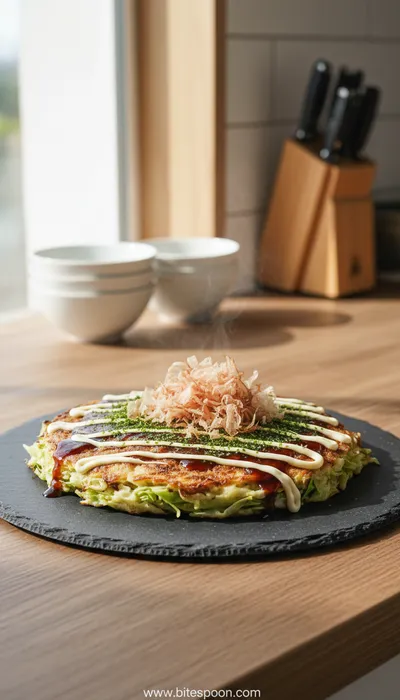
Okonomiyaki: Japanese Savory Pancake Recipe
Discover the comforting world of okonomiyaki, Japan's beloved savory pancake that you can customize with your favorite toppings and fillings.
Timing
Prep Time
20 Minutes
Cook Time
15 Minutes
Total Time
35 Minutes
Recipe Details
Ingredients
Pancake Batter
-
01
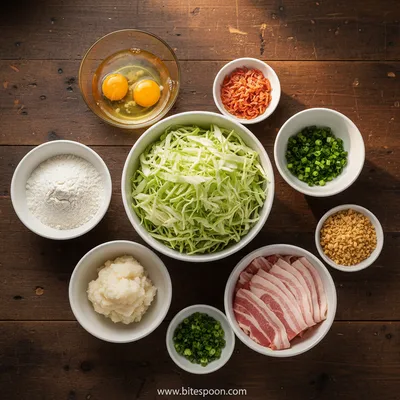
2 cups finely shredded green cabbage
-
02
1 cup okonomiyaki flour (or all-purpose flour + 1 tbsp cornstarch)
-
03
2/3 cup dashi stock (or vegetable broth)
-
04
2 large eggs
-
05
2 tbsp grated yamaimo (mountain yam) - optional but traditional
-
06
1/4 tsp salt
-
07
1/4 tsp baking powder
Toppings & Fillings
-
01
4 slices turkey ham, chopped
-
02
1/4 cup tenkasu (tempura bits)
-
03
2 tbsp pickled red ginger (beni shoga)
-
04
2 scallions, thinly sliced
-
05
Okonomiyaki sauce for drizzling
-
06
Japanese mayonnaise for drizzling
-
07
Aonori (seaweed flakes) for sprinkling
-
08
Katsuobushi (bonito flakes) for topping
Instructions
In a large bowl, whisk together the flour, salt, and baking powder. Make a well in the center and add the dashi stock and eggs. Mix until just combined - don't overmix. Fold in the shredded cabbage, turkey ham, tenkasu, pickled ginger, and scallions. Let the batter rest for 10 minutes.
Heat a large non-stick skillet or griddle over medium heat. Add a tablespoon of oil. Pour about 3/4 cup of batter for each pancake, spreading it into a 6-inch circle about 1/2-inch thick. Cook for 4-5 minutes until the edges are set and the bottom is golden brown.
Carefully flip the pancake using two spatulas. Cook for another 4-5 minutes until the second side is golden brown and the pancake is cooked through. You can test by inserting a toothpick - it should come out clean.
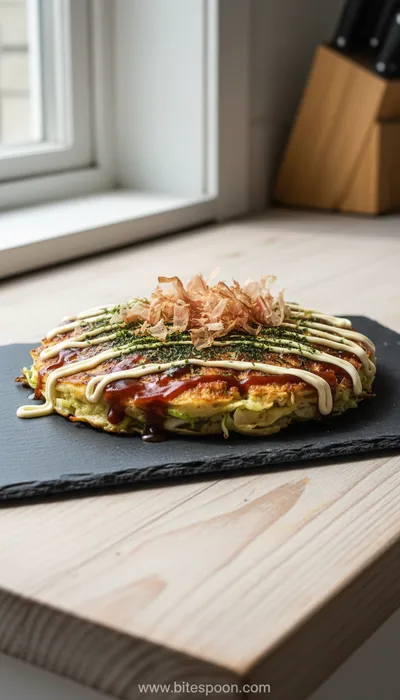
Transfer to a serving plate. Drizzle generously with okonomiyaki sauce in a zigzag pattern, followed by Japanese mayonnaise. Sprinkle with aonori and katsuobushi flakes. The bonito flakes will dance and curl from the heat - such a delightful sight!
Serve immediately while hot. Cut into wedges if sharing, or enjoy whole with chopsticks. The contrast of crispy edges and fluffy interior is what makes okonomiyaki so special.
Notes & Tips
-
1
The batter should be thick but pourable - if it's too thick, add a tablespoon more liquid
-
2
Don't press down on the pancake while cooking - let it puff up naturally
-
3
If making multiple pancakes, keep cooked ones warm in a 200°F oven
-
4
Leftovers can be refrigerated and reheated in a toaster oven for best texture
Tools You'll Need
-
Large mixing bowl
-
Whisk
-
Box grater or mandoline for cabbage
-
Large non-stick skillet or electric griddle
-
Spatulas (2 for easier flipping)
-
Measuring cups and spoons
Must-Know Tips
-
Shred cabbage finely - larger pieces won't cook through properly
-
Let batter rest - this hydrates the flour and improves texture
-
Medium heat is key - too high burns outside before inside cooks
-
Don't overcrowd the pan - give each pancake space to cook evenly
Professional Secrets
-
Grated yamaimo adds authentic fluffiness - it contains natural enzymes
-
Resting the batter allows gluten to relax - results in tender pancake
-
Cook until edges are fully set before flipping - prevents breaking
-
Serve immediately - okonomiyaki is best eaten hot off the griddle

Recipe by
Sofia RiveraExploring the world through food 🌍🍲 Rich flavors, exciting dishes, and endless culinary inspiration ✨
Get Delicious Recipes Weekly
Join 25,000+ home cooks getting our best recipes straight to their inbox.
Free forever • No spam • Unsubscribe anytime