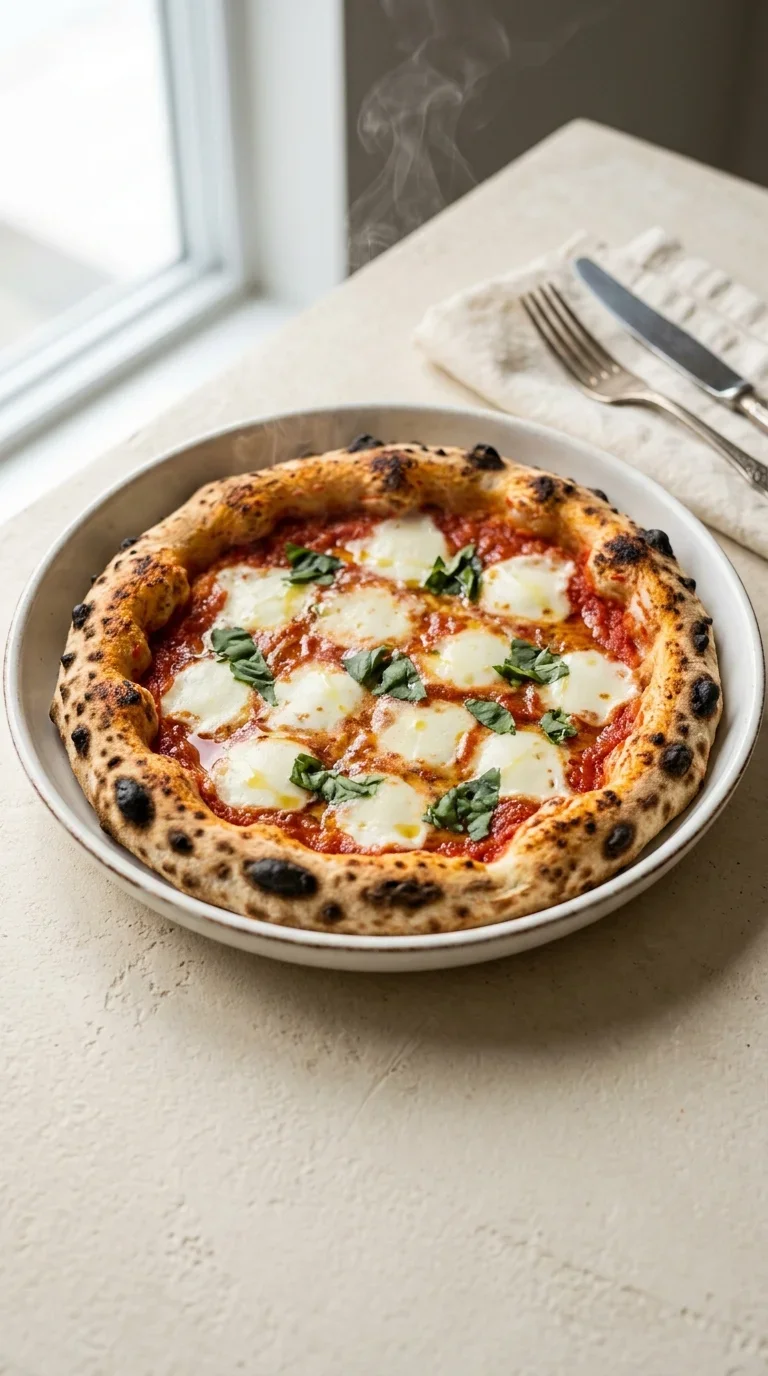
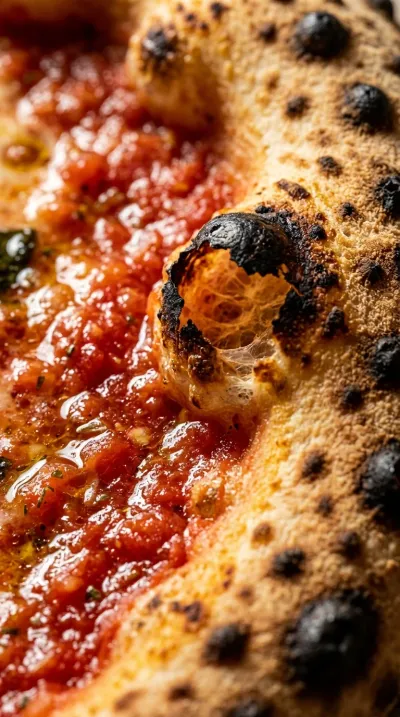
The art of the Neapolitan pizza is a storied tradition born in the heart of Naples, Italy, where the heat of the oven is as essential as the ingredients themselves. Traditionally, these pizzas are cooked at blistering temperatures to achieve a "leopard-spotted" crust, a characteristic result of high-heat fermentation and rapid expansion. While the classic version relies on fresh yeast, the integration of sourdough discard pizza dough adds a layer of ancestral depth, echoing the ancient methods of wild fermentation used long before commercial yeast existed.
Culturally, pizza has evolved from a humble street food for the working class into a global symbol of comfort. The use of Tipo 00 flour—a finely milled powder—is key to achieving that silkiness, while the addition of whole-wheat pastry flour provides a rustic, nutty undertone that grounds the brightness of the acidity.
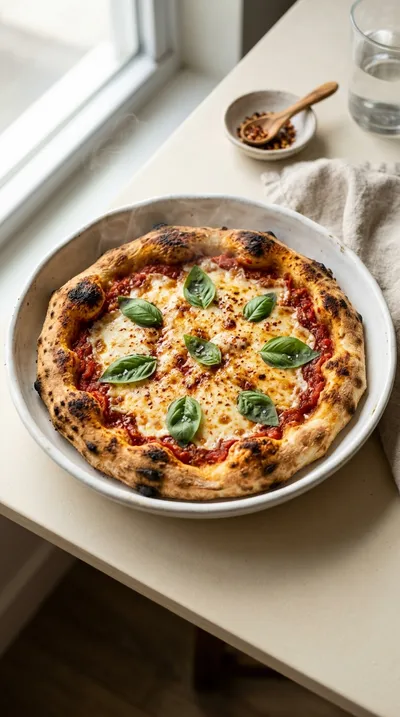
Today, the practice of cold fermentation has become a cherished technique for home bakers. By slowing down the rise over twenty-four hours, the sugars in the flour break down more completely, resulting in a crust that is not only easier to digest but carries a sophisticated, tangy profile that pairs perfectly with fresh mozzarella and basil.
Why You'll Love It
-
- Honestly, using 240 g sourdough discard feels like a little gift to yourself, turning something usually tossed into a crust that tastes just like a real Italian bakery.
-
- I mean, that 24-hour cold fermentation does all the heavy lifting, giving you those gorgeous, airy bubbles and a depth of flavor that's just... wow.
-
- There is something so grounding about the way 375 g Tipo 00 flour makes the dough feel, so smooth and silky under your palms during the knead.
-
- Well, look, nothing beats the smell of fresh mozzarella and basil melting at 430 °C; it just fills the whole house with a warmth that makes everyone gather in the kitchen.
"Wow, I can't believe this came from my discard! The crust is so light and airy, honestly the best pizza I've ever made."
Essential Ingredient Guide
- 240 g sourdough discard: This is the heart of it all. I always make sure mine is stirred well so it's nice and bubbly before it hits the bowl.
- 375 g Tipo 00 flour: It's so much finer than regular flour, really. It's what gives us that classic, soft-yet-crispy Neapolitan texture we're after.
- 120 g whole‑wheat pastry flour: I love adding this for a bit of earthy soul. It adds a lovely golden hue and a subtle nuttiness that balances the tang of the sourdough.
- 5 g salt: Don't skip this, ugh, it's what makes all the other flavors pop. Just a pinch of simple salt keeps the dough from tasting flat.
- 15 g extra‑virgin olive oil: A little bit of good oil keeps the dough supple. It also helps the crust brown beautifully in that scorching hot oven.
- 5 g sugar (optional): Now, I only use this if I want a slightly quicker browning. It's just a tiny bit to help the crust get that sunset glow.
Complete Cooking Process
-
Getting Everything Ready:
I start by whisking the 240 g sourdough discard with 240 g warm water. It's so peaceful watching it get all smooth and bubbly before the flours go in.
-
Letting the Flavor Bloom:
The magic happens during that 24-hour nap in the fridge. It's where the sourdough really develops its character, turning a simple dough into something complex.
-
Managing the Texture:
Kneading for 8‑10 minutes is key here. You want it to feel elastic and smooth, like a soft pillow, so it holds those beautiful air pockets.
-
The Final Touch:
Right before the heat, I gently press the dough with my fingertips. I always avoid the rolling pin—we want to keep all those lovely bubbles inside.
-
Serving at the Peak:
The moment it hits 95 °C (203 °F) internally, it's ready. Serve it immediately while the cheese is still dancing and the crust is crisp.
-
If your oven doesn't hit 430 °C, just use a stone on the lowest rack and bake a couple of minutes longer.
-
Gently press the dough into the center before stretching to help the gluten structure.
-
Brush the edges with olive oil and a pinch of sea salt after baking for a professional crunch.
-
Let the chilled dough sit for 30 minutes at room temperature so it doesn't snap back when you shape it.
Pro Tips
Just take your time with it and enjoy the process.


Better For You Treats
I feel better knowing that using 120 g whole‑wheat pastry flour adds a bit of fiber to our meal. Plus, the sourdough fermentation makes it a bit gentler on the tummy than standard dough.
Ways to Make it Your Own
If you're feeling fancy, try adding a teaspoon each of dried oregano and rosemary for an herb-infused crust. Or, for a different chew, you can swap the flours for 60% spelt and 40% white flour.
Serving Suggestions
I love pairing this with a crisp arugula salad dressed in lemon and oil. For a little extra something, a sprinkle of Parmigiano‑Reggiano after baking adds such a lovely, savory kick.
Frequently Asked Questions
→ Can I make this if I don't have a pizza oven?
Oh, absolutely. Just use a pizza stone on the lowest rack of your home oven and keep a close eye on it.
→ What if my dough is too sticky to knead?
Dang, that happens to the best of us! Just sprinkle a little more Tipo 00 flour on your hands and the surface until it behaves.
→ Do I really have to wait 24 hours?
Well, you can bake it sooner, but the flavor just isn't the same. That long wait is what gives it that professional, tangy taste.
Nutrition Facts
per serving
680
Calories
32g
Protein
85g
Carbs
22g
Fat
Taste Profile
A complex, tangy sourdough base balanced by creamy mozzarella and bright tomato sauce.
Ingredient Substitutions
Don't have an ingredient? Try these alternatives
The crust will be slightly denser and less "airy" than with 00 flour.
Use less to avoid a greasy pizza since it doesn't release as much water.
The dough will be a bit heavier, so you might need a touch more water.
Recipe Variations
Try these delicious twists on the original
Herb-Infused Sourdough Pizza Dough
For a more fragrant, Italian-style crust, just add 1 teaspoon each of dried oregano and rosemary to your dry ingredients.
Gluten-Free Sourdough Pizza Dough
Replace the Tipo 00 and whole-wheat flour with 60% spelt flour and 40% white flour (or a GF blend) and reduce your water by 15% for a chewier texture.
Common Mistakes to Avoid
Learn from others' mistakes for perfect results
- Using a rolling pin, which crushes the air bubbles and ruins the light texture.
- Rushing the preheat process, resulting in a pale, undercooked bottom.
- Skipping the 30-minute room temperature relax period, making the dough spring back.
Meal Prep & Storage
Make Ahead Tips
This recipe is designed for making ahead. The dough must be refrigerated for 24 hours to develop flavor and texture.
Leftover Ideas
Store cooled pizza in an airtight container for 2 days. Reheat in a 150 °C (300 °F) oven for 10 minutes to bring back the crispiness.
Perfect Pairings
Serve this with...
Cooking Timeline
Mixing and kneading the dough
Room temperature bulk fermentation
Cold fermentation in the refrigerator
Dough relaxation and oven preheating
Shaping, topping, and baking
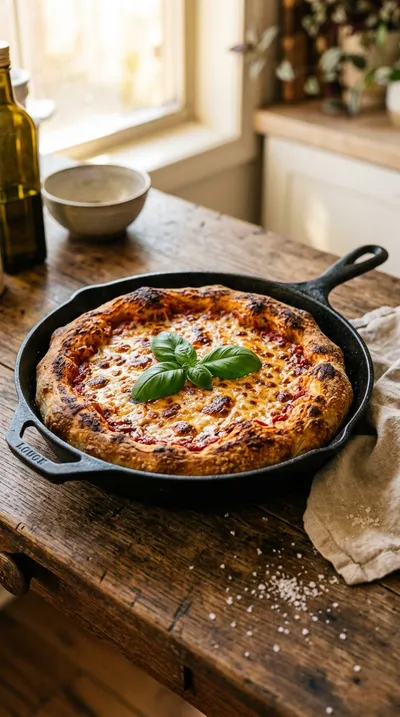
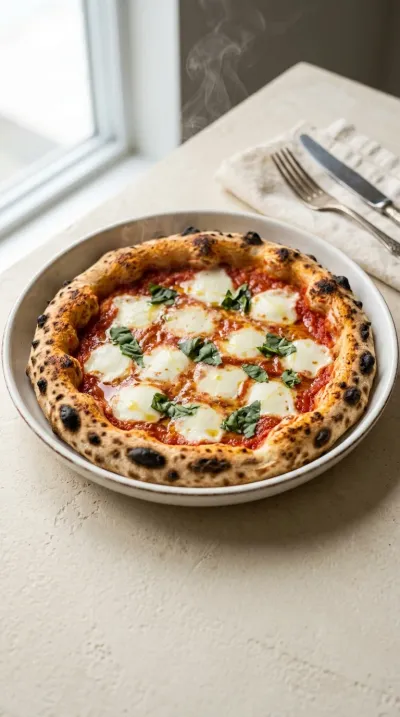
Best Sourdough Discard Pizza Dough for Pizza Ovens
Enjoy a rustic, bubbly crust made with sourdough discard pizza dough that blisters beautifully in a hot oven. The combination of Tipo 00 flour and whole-wheat pastry flour creates a wonderful chew and a golden, crisp finish.
Timing
Prep Time
30 Minutes
Cook Time
10 Minutes
Total Time
1450 Minutes
Recipe Details
Ingredients
The Dough
-
01
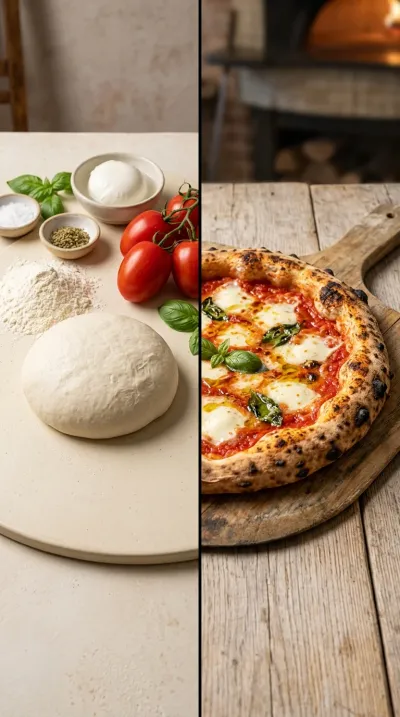
240 g sourdough discard
-
02
240 g warm water (approx. 75°F)
-
03
375 g Tipo 00 flour
-
04
120 g whole-wheat pastry flour
-
05
5 g salt
-
06
5 g sugar (optional)
-
07
15 g extra-virgin olive oil
Toppings
-
01
1/2 cup pizza sauce
-
02
8 oz fresh mozzarella, sliced
-
03
Fresh basil leaves for topping
Instructions
Start by grabbing a large bowl and whisking together your 240 g sourdough discard and 240 g warm water (approx. 75°F). Just keep going until it looks all smooth and bubbly—it's a lovely little start.
Now, gently stir in the 375 g Tipo 00 flour, 120 g whole-wheat pastry flour, 5 g salt, 5 g sugar (if you're using it), and 15 g extra-virgin olive oil. Use a wooden spoon to mix it all up until a shaggy dough forms; it'll look a bit messy at first, but that's okay.
Turn that dough out onto a surface with a bit of flour. Now comes the workout—knead it for 8-10 minutes. You're looking for it to become smooth and elastic, and honestly, the best part is when it just stops sticking to your hands.
Shape your dough into a nice ball and tuck it into a lightly oiled bowl. Cover it with plastic wrap and let it just rest at room temperature for 2 hours. After that bulk fermentation, move it to a clean airtight container and pop it in the fridge for exactly 24 hours. Patience is key here.
On the day you're ready to bake, take the dough out of the fridge. Let it sit at room temperature for about 30 minutes. It just needs a little time to relax before you start shaping it.
Preheat your oven to 430 °C (800 °F) with your pizza stone or steel already inside. Give it at least 1 hour to heat up; we want that surface really hot for a good crust.
While the oven is getting hot, turn the dough onto a well-floured peel or some parchment paper. Divide it into two equal portions—one for each of your medium pizzas.
Using just your fingertips, gently press and stretch each piece into a 12-inch round. Try to keep the edges a bit thicker for the crust. Look, please avoid using a rolling pin—we want to keep those lovely airy bubbles inside.
Spread about 1/2 cup pizza sauce over each crust, but leave a small border. Then, arrange your slices of fresh mozzarella and add a handful of fresh basil leaves on top.
Slide the pizza onto the hot stone using your peel and bake for 7-9 minutes. You're looking for a golden brown crust and bubbling cheese. I like to use a digital thermometer to make sure the internal dough temperature hits 95 °C (203 °F).
Notes & Tips
-
1
The long cold ferment is what gives the crust that restaurant-style flavor.
-
2
Tipo 00 flour is wonderful for that specific Neapolitan chew.
-
3
Using a digital thermometer takes the guesswork out of knowing when the crust is actually done.
Tools You'll Need
-
Large mixing bowl for combining ingredients
-
Dough scraper to help handle the sticky dough
-
Plastic wrap or an airtight container for fermentation
-
Pizza peel for sliding the pizza into the oven
-
Pizza stone or steel for high-heat baking
-
Oven capable of reaching 430 °C (800 °F)
-
Digital thermometer for checking internal temperature
Must-Know Tips
-
Oven Temperature, If your oven doesn't hit 430 °C, use the lowest rack and bake 2 minutes longer, but keep a close eye on it.
-
Airy Rise, Gently press the dough into the center before stretching to help the gluten structure.
-
Crispier Edges, Lightly brush the crust with olive oil before baking and add a pinch of sea salt after.
Professional Secrets
-
Avoiding the rolling pin preserves the carbon dioxide bubbles created during fermentation.
-
A 24-hour cold soak in the fridge develops complex acids and a better crumb.
-
The 95 °C internal temperature is the gold standard for a fully baked pizza crust.
What readers are saying
Community reviews from home cooks like you
I wanted to love this dish, but it didn't quite work for me. The texture was a touch off, but the flavor saved it. I think with some tweaks it could be really good.
So easy and delicious. I really liked how the 240 g sourdough discard and 240 g warm water (approx. 75°F) came together. I swapped one ingredient and it still worked. My kids even asked for seconds.

Recipe by
Sofia RiveraExploring the world through food 🌍🍲 Rich flavors, exciting dishes, and endless culinary inspiration ✨
Get Delicious Recipes Weekly
Join 25,000+ home cooks getting our best recipes straight to their inbox.
Free forever • No spam • Unsubscribe anytime