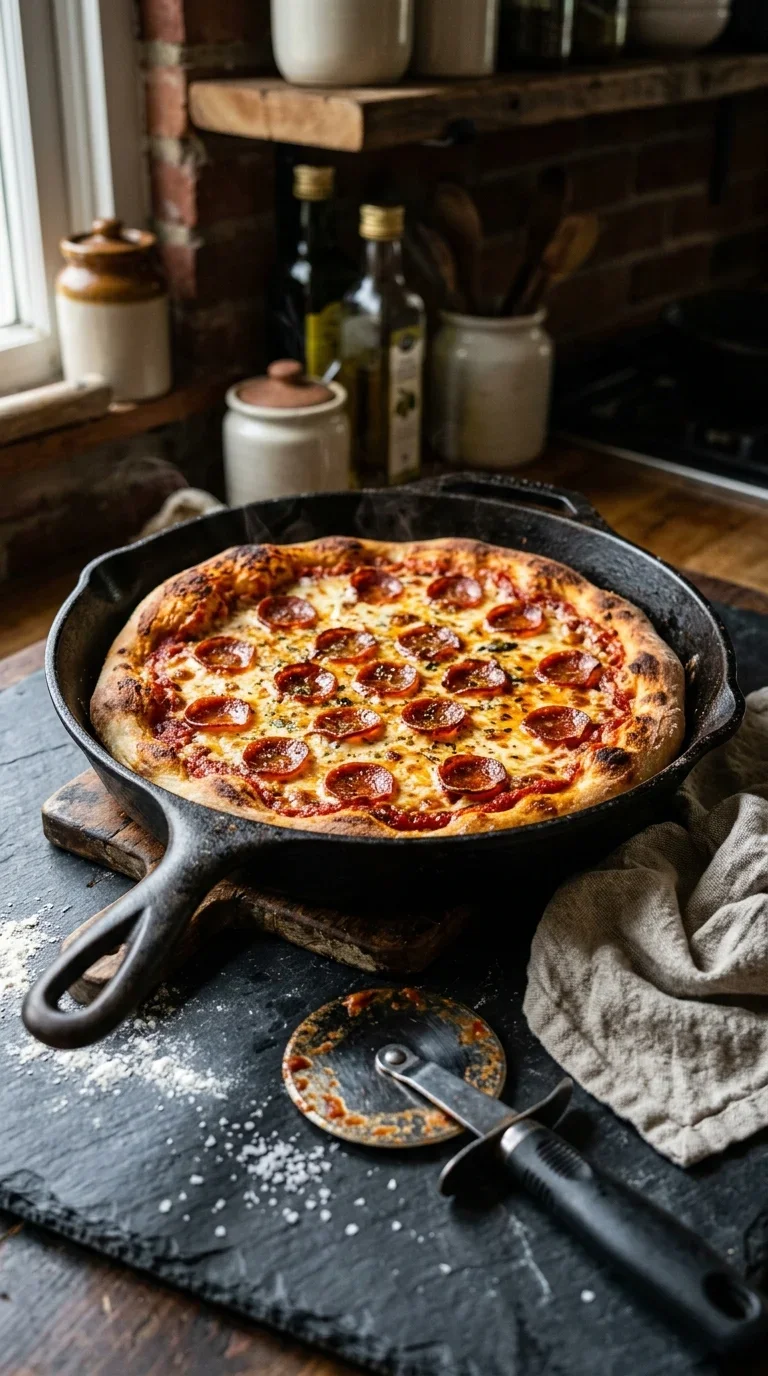
The art of the cast iron sourdough discard pizza is a marriage of two ancient traditions: the wild fermentation of sourdough and the rustic utility of cast iron cookware. Sourdough itself dates back thousands of years to ancient Egypt, where the natural yeasts in the air created a tang and texture that commercial yeast simply cannot replicate. The practice of using 'discard' is a modern reflection of the historical virtue of waste-not-want-not, ensuring every bit of the living culture is utilized.
Cast iron, meanwhile, has been the heartbeat of the home kitchen for centuries, prized for its ability to hold and distribute heat evenly. When used for a pizza crust, the heavy metal mimics the intense heat of a professional brick oven, searing the bottom of the dough to create a caramelized, crispy foundation. This technique transforms a simple flatbread into a gourmet experience.
Culturally, the skillet pizza represents a shift toward mindful, slow-living practices within a fast-paced world. By combining 1/2 tsp salt, 1 tsp baking powder, and a bit of olive oil with a fermented starter, the cook engages in a sensory process that is as much about the feeling of the dough as it is about the final taste. It is a celebration of patience and the enduring appeal of home-cooked comfort.
Why You'll Love It
-
- Honestly, it's just such a relief to use up that 1 cup sourdough discard instead of feeling guilty about tossing it.
-
- That 10-inch cast iron skillet does something magical to the crust, making it deep golden and wonderfully crunchy on the bottom.
-
- Well, look, it's just so fast; you get that chewy, airy sourdough taste without waiting all day for a rise.
-
- I mean, there's something so cozy about the smell of 8 oz shredded mozzarella cheese melting under a lid on the stovetop.
"I mean, wow... the crust is actually crunchier than delivery! My kids loved the bubbly cheese. Just wonderful."
Essential Ingredient Guide
- 1 cup sourdough discard (approx. 240 ml): This is the heart of the recipe, providing that signature tang. I remember when I first started, I worried it was too sour, but it actually adds such a lovely depth to the crust.
- 1 cup all‑purpose flour (120 g): This gives us the structure we need to hold everything together. Just stir it in gently so the dough stays tender and doesn't get too tough.
- Optional toppings: sliced bell peppers, black olives, pepperoni, fresh basil, red pepper flakes: These are where you can really have some fun. I love a few black olives for a salty pop, but honestly, whatever you have in the fridge works just fine.
- 1 tsp dried oregano: A little sprinkle goes a long way in making the kitchen smell like a real pizzeria. It adds that earthy, herbal note that ties the cheese and sauce together.
- 2 tbsp olive oil (30 ml): This is what helps the crust fry up in the skillet. It gives the bottom that gorgeous, caramelized crunch that we're all after.
- 1/2 cup marinara or pizza sauce (120 ml): A good, thick sauce is key here so the crust doesn't get soggy. I prefer something simple and bright to balance the richness of the cheese.
Complete Cooking Process
-
Getting Ready:
Start by whisking your sourdough discard and other dry bits together until you have a sticky dough. Letting it rest for 10 minutes is a must—it just helps the gluten relax so you can shape it without a struggle.
-
Building the Base:
The magic happens when the dough hits that hot, oiled skillet. Cooking the crust for 4 minutes first ensures the bottom sets firmly before you add the weight of the toppings.
-
Managing the Crunch:
Covering the pan with a lid traps the heat to melt the cheese while the bottom continues to crisp. Just keep an eye on it so that deep golden brown color doesn't turn into a burn.
-
The Final Touch:
Once it's off the heat, a few leaves of fresh basil or a tiny drizzle of olive oil makes it feel special. It's those little things that make a home meal feel like a treat.
-
The Perfect Slice:
Let the pizza rest for about 3 minutes before sliding it onto the board. This helps the cheese set just enough so it doesn't slide right off when you cut into it.
-
Resting the dough at room temperature yields a more elastic dough that cooks evenly and remains chewy.
-
A fully preheated skillet is key—if the crust starts to stick or looks too soggy, it wasn't hot enough.
-
Seal the crust's edges with a light coating of olive oil before adding sauce to prevent a soggy base.
-
Cover the skillet with a lid or foil to ensure the cheese melts fully while the bottom browns.
Pro Tips
You've got this, just trust your instincts and the smell of the browning crust!
Better For You Treats
It's nice to know this treat has a bit of goodness in it, like probiotics from the sourdough discard and calcium from the 8 oz shredded mozzarella cheese. I find that adding plenty of sliced bell peppers makes it feel like a more balanced meal for the family.
Ways to Make it Your Own
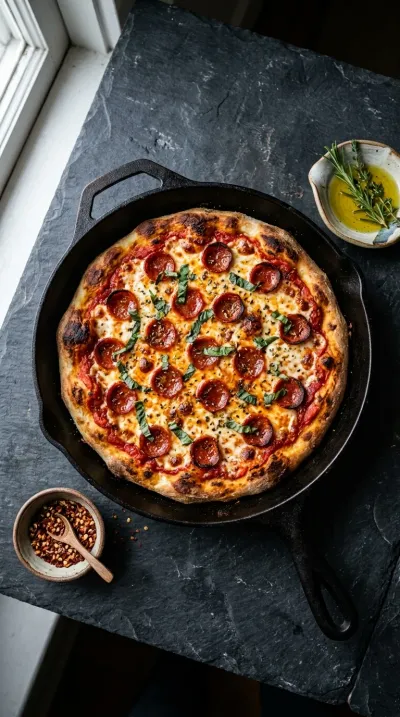
If you're feeling fancy, try a Margherita style with fresh basil and extra mozzarella. Or, for something with a kick, add red pepper flakes and smoked paprika to the sauce for a spicy pepperoni version.
Serving Suggestions
I love serving this with a fresh arugula salad tossed in lemon vinaigrette to cut through the richness. And wow, a side of homemade garlic knots or some extra marinara for dipping is always a hit with the kids.
Frequently Asked Questions
→ What if my dough is too sticky to handle?
Oh, don't worry, sourdough discard dough can be a bit fussy. Just use a lightly floured surface or a dry bowl to shape it—it'll behave once it hits the heat.
→ Can I use a different pan if I don't have cast iron?
You can, but honestly, you'll miss out on that specific crunch. A heavy stainless steel pan works in a pinch, just be extra careful with the oil so it doesn't stick.
→ How do I know when the bottom is actually done?
Just peek under the edge with a spatula; you're looking for a deep golden brown. If you have a thermometer, you're aiming for an internal temperature of about 240°F.
Nutrition Facts
per serving
410
Calories
16g
Protein
38g
Carbs
18g
Fat
Taste Profile
A savory, tangy balance of fermented sourdough and rich, melted cheeses.
Ingredient Substitutions
Don't have an ingredient? Try these alternatives
Will result in a slightly chewier crust.
Adds a sharper, tangier flavor profile.
Recipe Variations
Try these delicious twists on the original
Margherita Skillet Pizza
A classic Italian twist. Swap the standard sauce for a light tomato base, top with extra mozzarella and fresh basil leaves, and finish with a drizzle of balsamic reduction.
Spicy Pepperoni Skillet Pizza
For those who like a bit of heat, add crisp pepperoni slices, red pepper flakes, and a sprinkle of smoked paprika to the sauce for a fiery, smoky bite.
Common Mistakes to Avoid
Learn from others' mistakes for perfect results
- Adding dough to a cold skillet, which leads to sticking and sogginess.
- Skipping the dough rest, resulting in a crust that is hard to shape.
- Moving the dough too early before the edges have set.
Meal Prep & Storage
Make Ahead Tips
The dough can be mixed and rested ahead of time, but it's best used fresh. You can also freeze pre-made pizzas wrapped in foil for later use.
Leftover Ideas
Store leftovers in a sealed container. To reheat, place them back in a skillet for about 5 minutes to bring back that wonderful crispness.
Perfect Pairings
Serve this with...
Cooking Timeline
Mix the dough ingredients in a medium bowl.
Let the dough rest while preheating the skillet.
Shape the dough and sear the bottom for 4 minutes.
Add toppings and cook covered for 6-7 minutes.
Rest for 3 minutes before slicing and serving.
Cast Iron Sourdough Discard Pizza – Crispy Skillet Crust
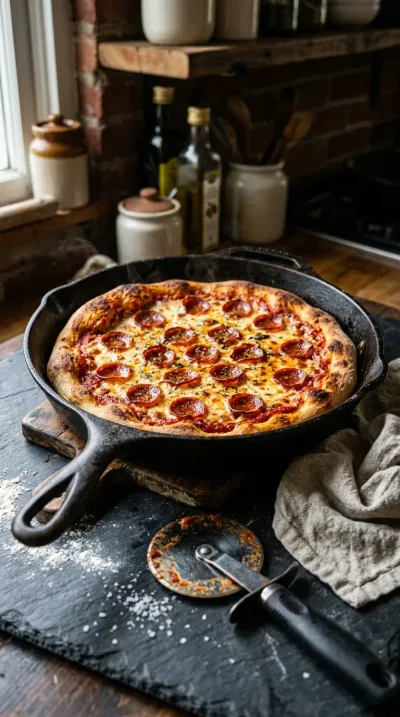
There is something so comforting about a cast iron sourdough discard pizza bubbling on the stove. The crust gets that lovely, deep golden crunch on the bottom while the cheese melts into a gooey, salty blanket of goodness.
Timing
Prep Time
15 Minutes
Cook Time
11 Minutes
Total Time
26 Minutes
Recipe Details
Ingredients
Dough Base
-
01
1 cup sourdough discard (approx. 240 ml)
-
02
1 cup all‑purpose flour (120 g)
-
03
1 tsp baking powder
-
04
1/2 tsp salt
-
05
2 tbsp olive oil (30 ml)
-
06
1 tbsp water (optional)
Toppings
-
01
1/2 cup marinara or pizza sauce (120 ml)
-
02
8 oz shredded mozzarella cheese (225 g)
-
03
2 tbsp grated Parmesan cheese (20 g)
-
04
1 tsp dried oregano
-
05
Salt and pepper to taste
-
06
Optional toppings: sliced bell peppers, black olives, pepperoni, fresh basil, red pepper flakes
Instructions
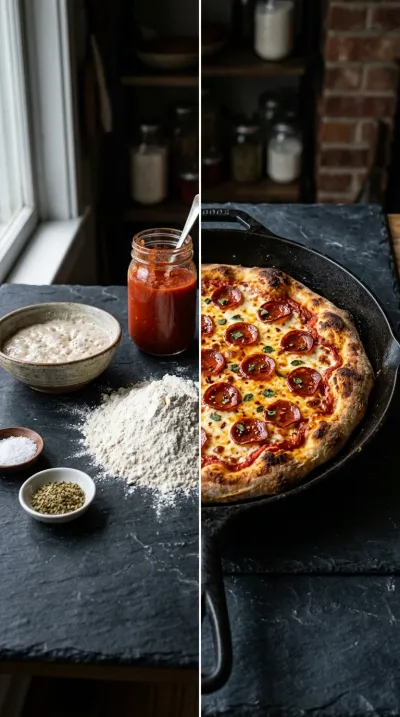
In a medium bowl, whisk together your 1 cup sourdough discard, 1 cup all‑purpose flour, 1 tsp baking powder, 1/2 tsp salt, 2 tbsp olive oil, and that optional 1 tbsp water. Just stir until a nice, sticky dough forms. Honestly, it's a bit messy, but that's okay.
Now, just let it be. Cover the bowl with a damp towel and let the dough rest at room temperature for 10 minutes. This lets the gluten relax and the flour hydrate, which makes the crust so much easier to work with.
Get your 10‑inch cast iron skillet ready. Preheat it on medium‑high heat for 10 minutes. Once it's hot, use a paper towel dipped in olive oil to lightly coat the surface. You want it just slick enough.
Divide the dough into two equal portions if you're making two, or keep it whole for one big pizza. Shape it into a 10‑inch round, about ¼ inch thick. I usually use a dry bowl or a little floured surface to keep it from sticking, then gently transfer it to that hot skillet.
Let it cook for 4 minutes. Don't move it! Just let it sit there until the edges start to turn golden and set. That's where the magic happens.
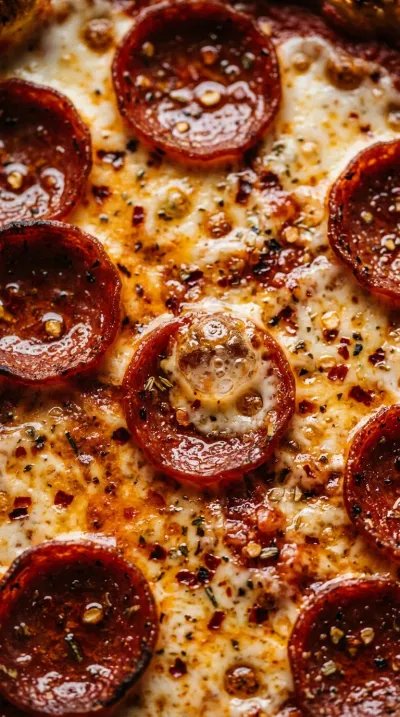
Spread your 1/2 cup marinara or pizza sauce evenly over the crust. Sprinkle on the 8 oz shredded mozzarella cheese, 2 tbsp grated Parmesan cheese, 1 tsp dried oregano, and a bit of salt and pepper. Go ahead and add your favorite optional toppings now.
Cover the skillet with a lid or a piece of foil and turn the heat down to medium. Cook for another 6–7 minutes. You're looking for bubbly cheese and a bottom that's a deep golden brown, with an internal temperature of around 240°F.
Take the skillet off the stove and let it rest for 3 minutes. I mean, I know it's hard to wait, but it helps the crust set. Then, slide it onto a cutting board using your spatula.
Garnish with some fresh basil or a little drizzle of olive oil. Slice it up and serve it while it's hot and wonderful.
Notes & Tips
-
1
Resting the dough at room temperature yields a more elastic dough that cooks evenly and remains chewy.
-
2
A fully preheated skillet is key to preventing a soggy crust.
-
3
Sealing the edges with olive oil before saucing keeps the base crisp.

Tools You'll Need
-
10‑inch cast iron skillet for that perfect sear
-
Medium bowl for mixing
-
Wooden spoon for stirring the sticky dough
-
Cooling rack or spatula for removing the pizza
-
Paper towel for oiling the pan
-
Cutting board for slicing
-
Knife or pizza cutter
Must-Know Tips
-
Preheat your pan, if the crust sticks or looks soggy, the skillet wasn't hot enough.
-
Rest the dough, giving it 10 minutes makes it far more elastic and chewy.
-
Oil the rims, a light coating of olive oil on the edges prevents a soggy base.
Professional Secrets
-
The 10-minute hydration rest is the difference between a tough crust and an airy one.
-
Using a lid or foil creates a mini-oven effect to melt cheese before the bottom burns.
-
The internal temp of 240°F ensures the dough is fully cooked through the center.
What readers are saying
Community reviews from home cooks like you
So easy and delicious. I really liked how the 1 cup sourdough discard (approx. 240 ml) and 1 cup all‑purpose flour (120 g) came together. I swapped one ingredient and it still worked. Thanks for sharing this one!
Will definitely make this again. I really liked how the 1 cup sourdough discard (approx. 240 ml) and 1 cup all‑purpose flour (120 g) came together. Already shared it with a friend.

Recipe by
Sofia RiveraExploring the world through food 🌍🍲 Rich flavors, exciting dishes, and endless culinary inspiration ✨
Get Delicious Recipes Weekly
Join 25,000+ home cooks getting our best recipes straight to their inbox.
Free forever • No spam • Unsubscribe anytime