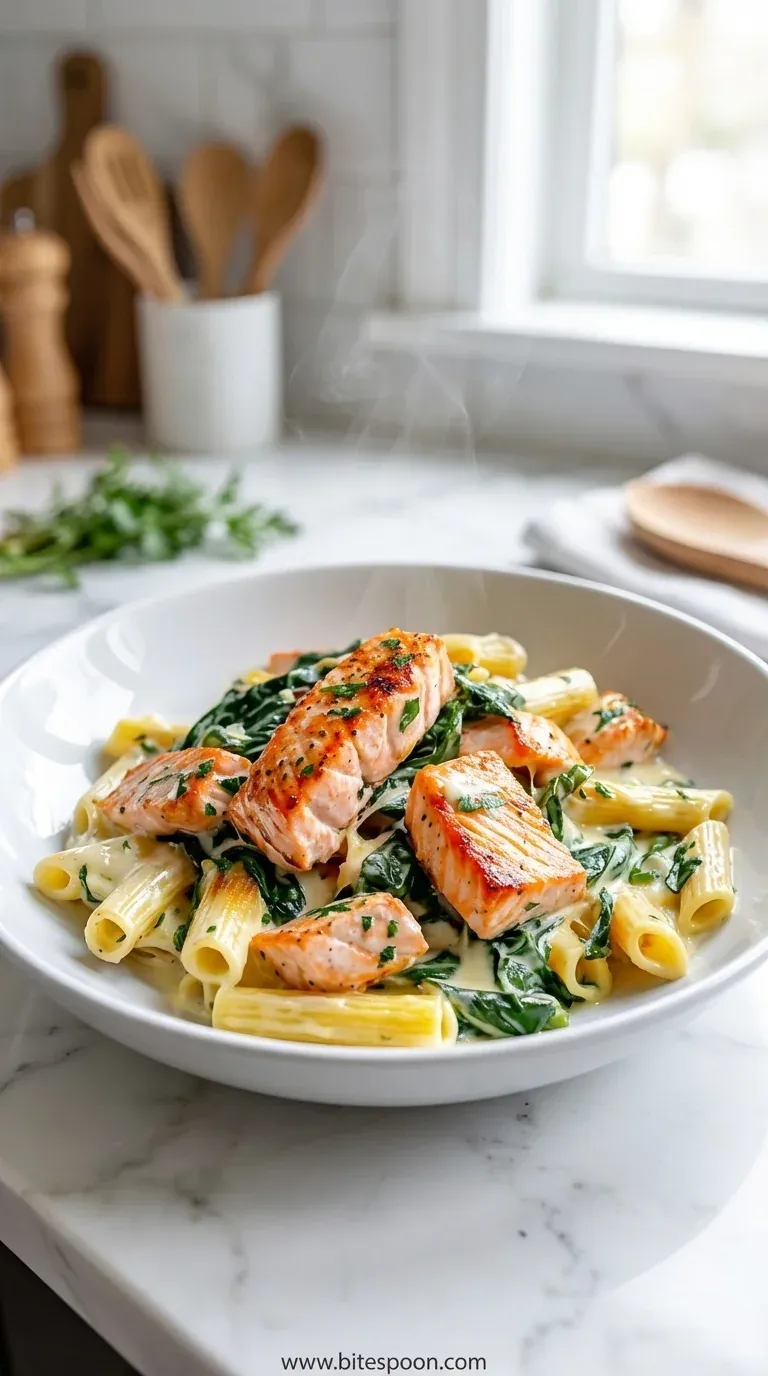
Honestly, when I first tossed this pasta together I felt a gentle calm settle over the kitchen. The scent of butter and fresh herbs rose like a soft sigh, and the steam curled around my hands. I remember the moment the salmon flaked just so, and I thought, wow, this is exactly what a busy weeknight needs. So, let’s walk through this simple, soothing dish together.
The essence of the dish
A harmonious blend of creamy, citrus‑bright sauce, tender salmon flakes, and vibrant spinach that makes every forkful feel comforting yet refined.
A fun fact or historical angle
In the early 1900s, Italian coastal families would toss smoked trout with pasta and cream, a precursor to today’s salmon version.
Flavor or sensory focus
You’ll notice the buttery aroma at the start, followed by a silky mouthfeel, then the fresh pop of lemon and the earthy whisper of spinach.
You Must Know
- Don’t over‑cook the salmon; it should stay buttery
- Add yogurt off the heat to prevent curdling
- Reserve a cup of pasta water for sauce adjustment
Keeping these points in mind turns a simple dinner into a little celebration of texture and flavor. I always taste as I go, letting the sauce speak to me. This habit, cultivated over years of home cooking, ensures the final plate sings.
The story behind it
The origins of salmon pasta trace back to coastal Italian towns where fishermen would combine their fresh catch with simple pantry staples. Over time, the creamy version emerged, marrying the rich, buttery notes of salmon with the comforting texture of pasta. Modern kitchens have adopted this classic, making it a beloved quick‑dinner staple across many households.
Why You'll Love It
- Ready in just 25 minutes, perfect for busy evenings
- Creamy sauce without heavy cream, using Greek yogurt
- Fresh spinach adds a boost of color and nutrition
- Flaky salmon provides heart‑healthy omega‑3s
Tips for success
- Don’t over‑cook salmon; it stays buttery and tender.
- Add yogurt off the heat to keep the sauce smooth.
- Reserve pasta water for sauce adjustment.
Professional secrets
- Use a splash of the starchy pasta water to emulsify the sauce.
- Finish with a cold knob of butter for extra shine.
- Season the salmon lightly before cooking for deeper flavor.
Common mistakes to avoid
- Over‑cooking salmon, resulting in a dry texture.
- Adding yogurt over high heat, causing curdling.
- Using too little pasta water, making the sauce thick.
Substitutions
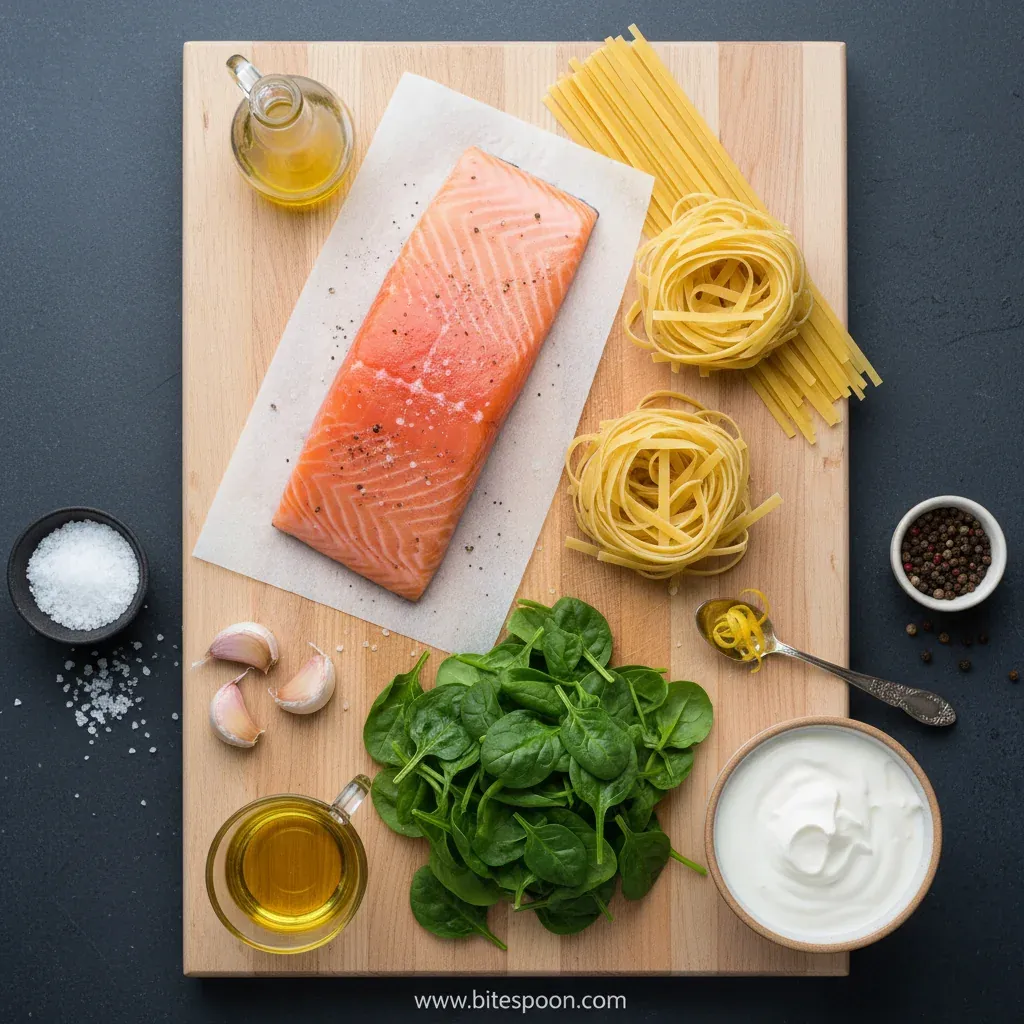
- Salmon fillet: Firm white fish such as cod or halibut. Adjust cooking time slightly; fish should flake easily.
- Greek yogurt: Low‑fat sour cream. Add a splash of milk if the sauce feels too thick.
Variations
- Spicy Version: Add a pinch of red pepper flakes and a dash of hot sauce for a gentle kick.
- Mediterranean Style: Stir in sun‑dried tomatoes, olives, and crumbled feta for a briny twist.
Storage
Store leftovers in an airtight container in the refrigerator for up to 2 days; reheat gently on the stove with a splash of water.
Make ahead
You can season and cube the salmon up to 24 hours ahead; keep it refrigerated and bring to room temperature before cooking.
Leftovers
Reheat gently in a skillet with a splash of water, stirring until the sauce regains its creaminess.
Serving ideas
- Plate over a nest of linguine, letting the sauce pool on top.
- Garnish with a sprinkle of fresh dill and extra Parmesan.
- Serve with a wedge of lemon on the side for added zest.
- Accompany with a light arugula salad dressed in olive oil.
Allergy information
Contains dairy, fish, and wheat. May contain traces of nuts from equipment.
Creamy Salmon Spinach Pasta in 25 Minutes
A quick, creamy pasta with salmon and spinach, ready in under half an hour.
- Prep time
- 10 min
- Cook time
- 15 min
- Total time
- 25 min
- Difficulty
- Easy
- Cuisine
- Mediterranean
- Course
- Main Course
Ingredients
Main Ingredients
Instructions
- 1
Bring a large pot of salted water to a boil, add the linguine and cook al dente according to package instructions. Reserve 1 cup of pasta water before draining.
- 2
While the pasta cooks, melt butter in a large skillet over medium heat. Add minced garlic and sauté until fragrant, about 30 seconds.
- 3
Add the salmon pieces, season lightly with salt and pepper, and cook for 3‑4 minutes, turning once, until just opaque. Remove salmon and set aside.
- 4
Return the skillet to low heat, stir in lemon juice, then whisk in Greek yogurt, ensuring the pan is off the direct heat to avoid curdling. Thin the sauce with reserved pasta water until glossy.
- 5
Add the cooked linguine, spinach, and salmon back to the skillet. Toss gently until spinach wilts and everything is evenly coated. Finish with grated Parmesan and a final drizzle of olive oil if desired.
- 6
Serve immediately, garnished with a sprinkle of fresh dill or extra Parmesan.
Nutrition per serving
- 420 kcal
- Calories
- 30 g
- Protein
- 45 g
- Carbs
- 14 g
- Fat
Tips & notes
- If the sauce thickens too quickly, add a little more pasta water to loosen it. - Taste and adjust seasoning before adding the final cheese. - For a richer flavor, brown the butter slightly before adding garlic.
Frequently asked questions
Can I use frozen salmon?
Yes, thaw it fully and pat dry; the texture will remain tender.
What if I’m out of Greek yogurt?
Replace with low‑fat sour cream; add a splash of milk to keep it smooth.
Can I make this gluten‑free?
Swap whole‑wheat pasta for rice noodles or gluten‑free pasta.
Is the dish spicy?
Not inherently, but a pinch of red pepper flakes adds a gentle heat.
How long does it keep refrigerated?
Store in an airtight container for up to 2 days; reheat gently.
Can I add other greens?
Absolutely—kale or arugula work nicely in place of spinach.

Alexa Carter
Fast food, but smarter 🔥🍽️ Bold flavors, simple steps, and meals that always hit the spot 😎