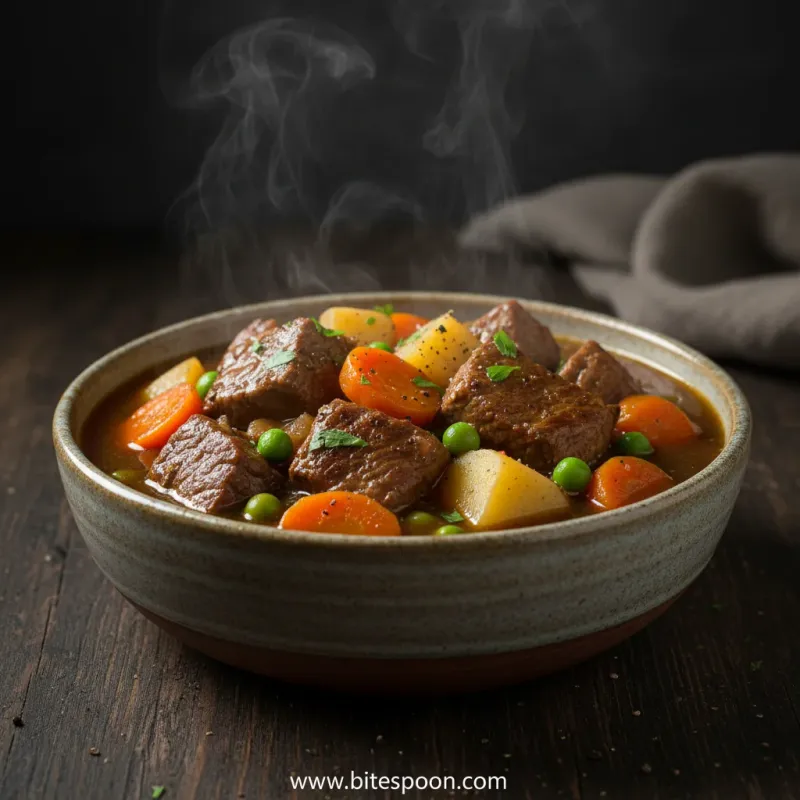
Honestly, there's nothing quite like coming home to the scent of beef stew simmering on the stove. It's that steady, earthy aroma that fills the whole house, promising warmth and comfort after a long day. I remember when my grandmother would make this on cold afternoons, and the whole kitchen would feel like a safe harbor.
The essence of the dish
What makes this stew special is how the simple ingredients transform through patient cooking. The beef becomes fork-tender, the vegetables soak up the rich broth, and everything melds together into this deeply satisfying comfort food that feels both rustic and refined.
A fun fact or historical angle
In medieval times, stew was often cooked in communal pots over open fires, with families contributing whatever ingredients they had. This communal approach to cooking created dishes that brought people together around nourishment and warmth.
Flavor or sensory focus
The first thing you'll notice is the rich, meaty aroma followed by the tender texture of the beef. Then the subtle sweetness of carrots and the earthy potatoes come through, all balanced by the savory broth.
You Must Know
- Brown the beef in batches to avoid steaming
- Simmer gently - boiling will make the meat tough
- Taste and adjust seasoning at the end
- The stew thickens as it cools
Browning the beef properly is probably the most important step, I mean, it really sets the stage for the whole flavor profile. And that gentle simmer - oh, it makes such a difference. I remember one time I got impatient and turned up the heat, and the beef turned out tough as leather. Yeah, that was a learning moment. Tasting at the end is crucial too because the flavors concentrate as it cooks, so you might need a pinch more salt or pepper to balance it just right.
The story behind it
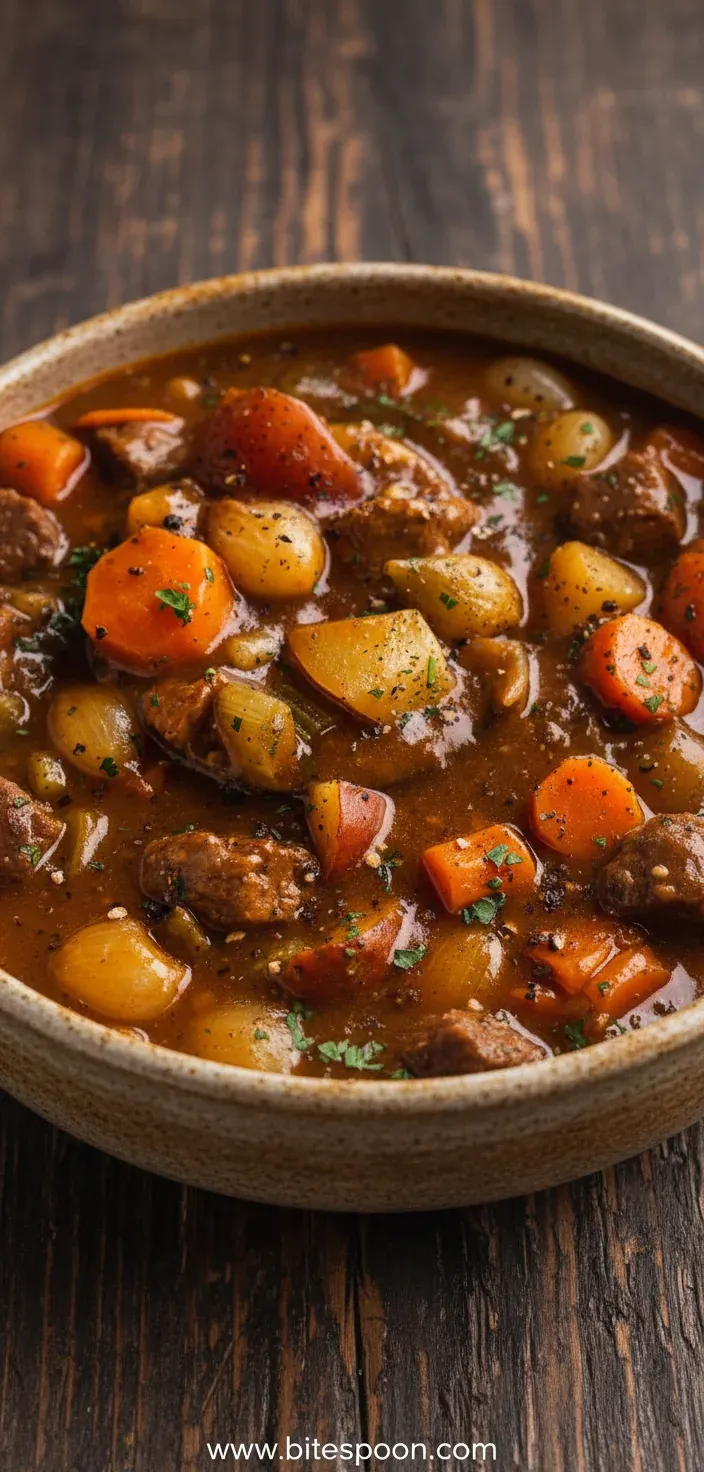
Beef stew has roots stretching back to medieval Europe, where slow-cooked meats and vegetables in a single pot provided nourishment for families through harsh winters. The method of browning meat before simmering it with root vegetables developed over centuries, creating the deeply satisfying dish we know today. This particular version captures the essence of that tradition, using simple techniques to build complex flavors that meld together beautifully during the long, gentle cooking process.
Why You'll Love It
- Tender beef that melts in your mouth after slow cooking
- Hearty vegetables that soak up all the rich flavors
- Perfect for meal prep - tastes even better the next day
- Comforting aromas that fill your home with warmth
Tips for success
- Pat beef dry before browning for better sear
- Don't overcrowd the pan when browning meat
- Simmer gently - boiling makes meat tough
- Let stew rest before serving for best flavor
Professional secrets
- Room temperature meat browns better than cold
- Deglaze the pan thoroughly to capture all flavor
- Use a heavy pot for even, consistent heat
Common mistakes to avoid
- Overcrowding pan when browning beef
- Boiling instead of simmering
- Adding potatoes too early (they can become mushy)
- Not scraping fond from bottom of pan
Substitutions
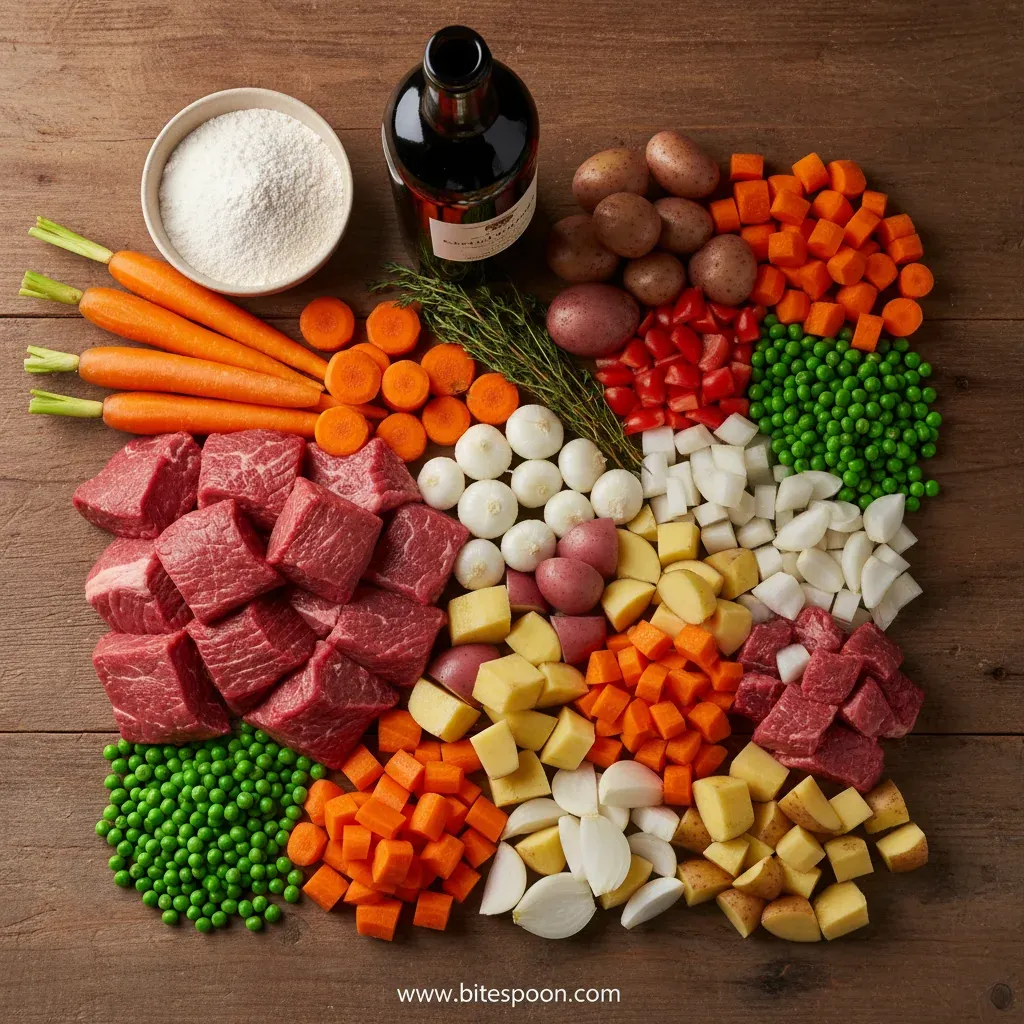
- Beef chuck: Beef stew meat or round roast. These cuts may require slightly longer cooking time to become tender
- Potatoes: Sweet potatoes or turnips. Sweet potatoes will add natural sweetness, turnips provide earthy flavor
Variations
- Hearty Vegetable Addition: Add mushrooms and pearl onions for extra depth and variety of textures
- Spiced Version: Add a pinch of smoked paprika and a dash of hot sauce for a subtle kick
Storage
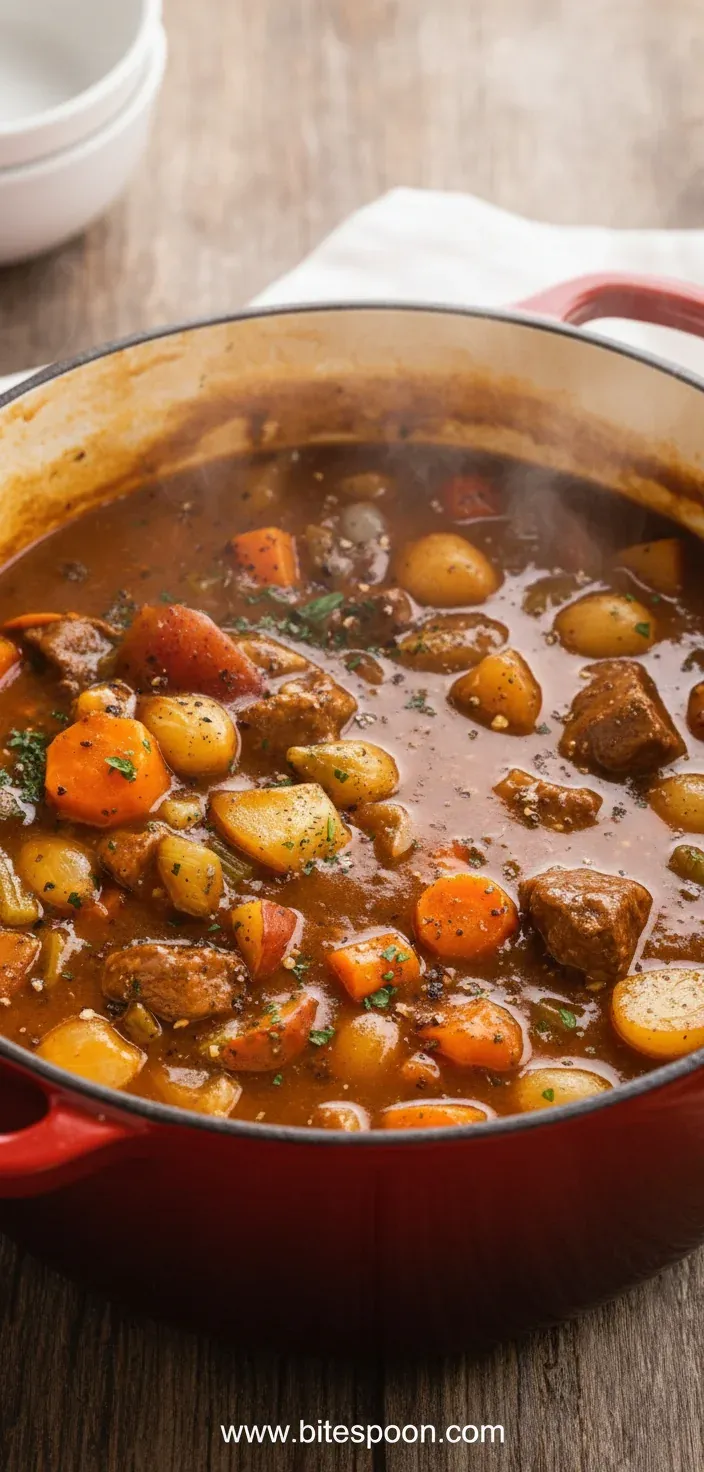
Store cooled stew in an airtight container in the refrigerator for up to 4 days. Reheat gently on the stove, adding a little broth if needed to thin it out.
Make ahead
You can prepare the stew completely up to 3 days ahead. The flavors actually improve with time. Reheat gently on the stove, adding a little broth if needed.
Leftovers
Leftovers are fantastic reheated. The flavors deepen overnight. Store in airtight containers and reheat gently on the stove with a splash of water or broth to thin if necessary.
Serving ideas
- In deep bowls with crusty bread
- Over mashed potatoes for extra comfort
- With a side of buttery noodles
- Garnished with fresh parsley for color
Allergy information
Contains gluten (from flour). Can be made gluten-free by using cornstarch instead of flour for thickening.
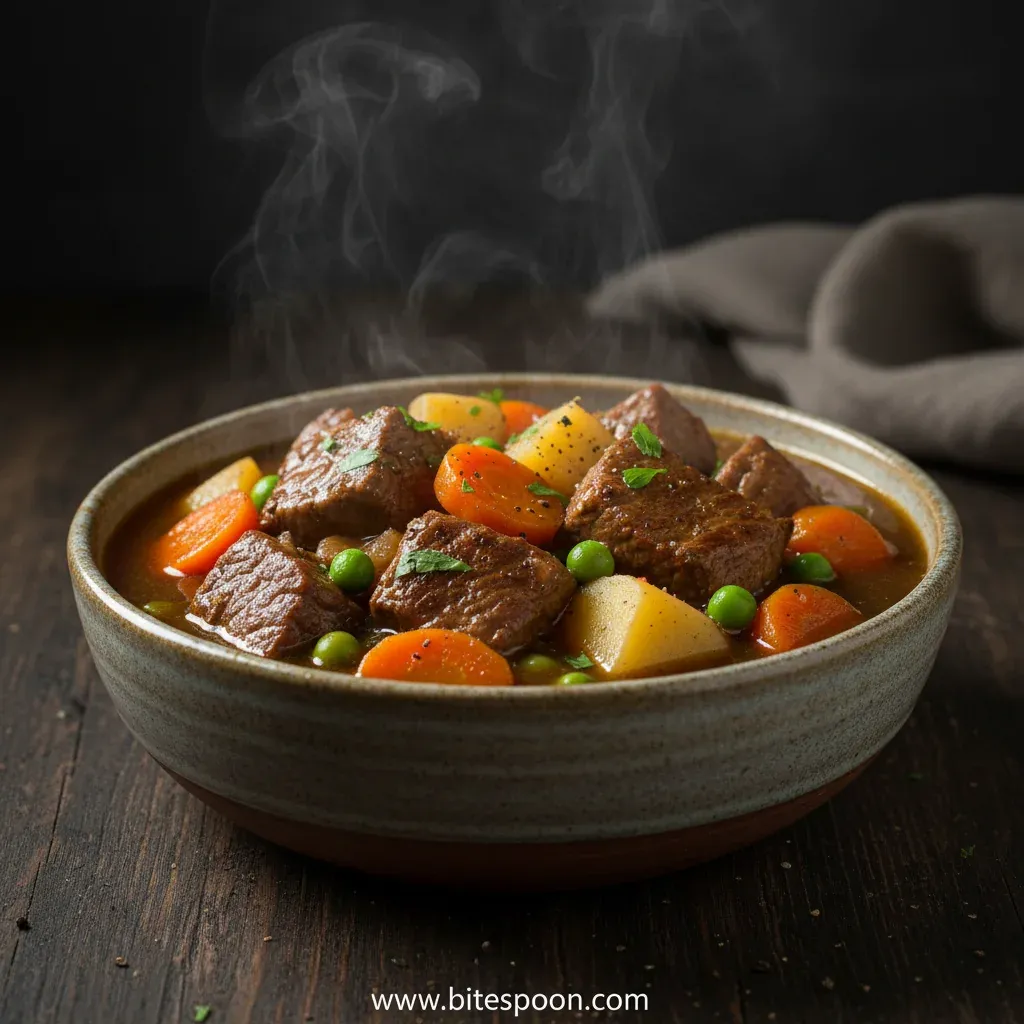
Old Fashioned Beef Stew
A classic beef stew with tender meat and hearty vegetables simmered slowly for deep flavor.
- Prep time
- 20 min
- Cook time
- 2 h 30 min
- Total time
- 2 h 50 min
- Difficulty
- Easy
- Cuisine
- American
- Course
- Main Course
Ingredients
For the Stew
Instructions
- 1
Pat the beef cubes dry with paper towels and season generously with salt and pepper. In a large heavy pot, heat 1 tablespoon of olive oil over medium-high heat. Brown the beef in batches, transferring to a plate when nicely seared on all sides.
- 2
Reduce heat to medium and add the remaining oil. Sauté the onions until softened, about 5 minutes. Add garlic and cook for another minute until fragrant.
- 3
Sprinkle the flour over the onions and garlic, stirring constantly for 2 minutes to cook out the raw flour taste. This will help thicken the stew later.
- 4
Slowly pour in the beef broth while scraping up any browned bits from the bottom of the pot. Return the beef to the pot along with any accumulated juices.
- 5
Add the carrots, potatoes, bay leaves, thyme, and Worcestershire sauce. Bring to a gentle simmer, then reduce heat to low, cover, and cook for 2 hours, stirring occasionally.
- 6
In the last 10 minutes of cooking, stir in the frozen peas. Remove bay leaves, taste and adjust seasoning. Let rest for 10 minutes before serving.
Nutrition per serving
- 425 kcal
- Calories
- 35 g
- Protein
- 32 g
- Carbs
- 18 g
- Fat
Tips & notes
- Stew thickens as it cools - if it becomes too thick upon reheating, add a splash of broth or water - Leftovers taste even better the next day as flavors continue to develop - For a richer broth, you can use a homemade broth instead of store-bought
Frequently asked questions
Can I make this stew ahead of time?
Absolutely, and honestly it often tastes even better the next day after the flavors have had more time to meld together. Just cool it completely before refrigerating.
What cut of beef works best for stew?
Beef chuck is ideal because it has good marbling and connective tissue that breaks down during slow cooking, resulting in incredibly tender meat.
Can I freeze this stew?
Yes, it freezes beautifully for up to 3 months. Thaw overnight in the refrigerator and reheat gently on the stove.
What if I don't have red wine?
You can substitute with additional beef broth. The flavor will be slightly different but still delicious.
How do I thicken the stew if it's too thin?
Make a slurry with equal parts flour and water, then stir it in during the last 30 minutes of cooking.
Can I add other vegetables?
Sure, parsnips, turnips, or celery would work well. Just cut them to similar sizes for even cooking.

Sofia Rivera
Exploring the world through food 🌍🍲 Rich flavors, exciting dishes, and endless culinary inspiration ✨