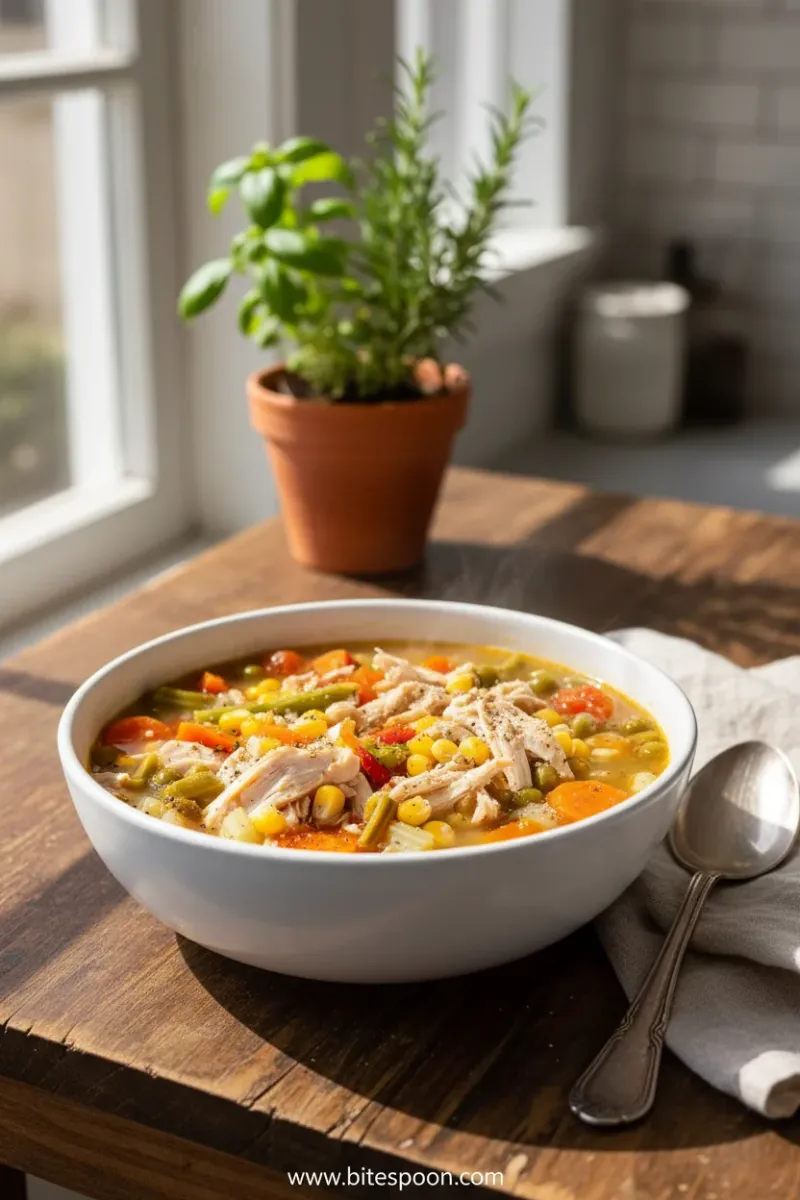
When the evenings get chilly and time feels scarce, this soup has always been my quiet anchor. Honestly, the way the kitchen fills with steam and the gentle scent of simmering vegetables... it feels like a warm hug after a long day.
The Essence of This Soup
What makes this soup special is how it turns something as simple as leftover chicken into a meal that feels both nourishing and celebratory. It's the kind of food that reminds you that comfort doesn't need to be complicated.
A Little History
Soup has been a staple in households for centuries, evolving from necessity to comfort. Using rotisserie chicken is just the modern twist on an age-old tradition of making the most of what you have.
The First Spoonful
When you taste this soup, you'll notice the way the savory broth carries the sweetness of the carrots, the earthy notes of the potatoes, and the freshness of the herbs all at once. Each spoonful feels complete.
The story behind it
Soup has been a staple of home cooking across cultures for centuries, evolving from simple peasant fare to beloved comfort food. The concept of using leftover meat to create a nourishing broth dates back generations, making the most of every ingredient. This rotisserie chicken version carries on that tradition of resourcefulness and warmth.
Why You'll Love It
- Uses convenient rotisserie chicken for a huge time-saver
- Packed with nutritious vegetables for a wholesome meal
- Perfect for meal prep and tastes even better the next day
- Comforting and satisfying without being heavy
Tips for success
- Don't overcook the peas - they only need to heat through
- Taste before seasoning - rotisserie chicken varies in saltiness
- Let soup rest before serving for optimal flavor
Professional secrets
- Sauté vegetables until slightly softened for better flavor
- Add chicken at the end to keep it tender
- Finish with fresh herbs for brightness
Common mistakes to avoid
- Overcooking the vegetables until mushy
- Adding salt before tasting - rotisserie chicken varies
- Boiling instead of gentle simmering
- Overcrowding with too many ingredients
Substitutions
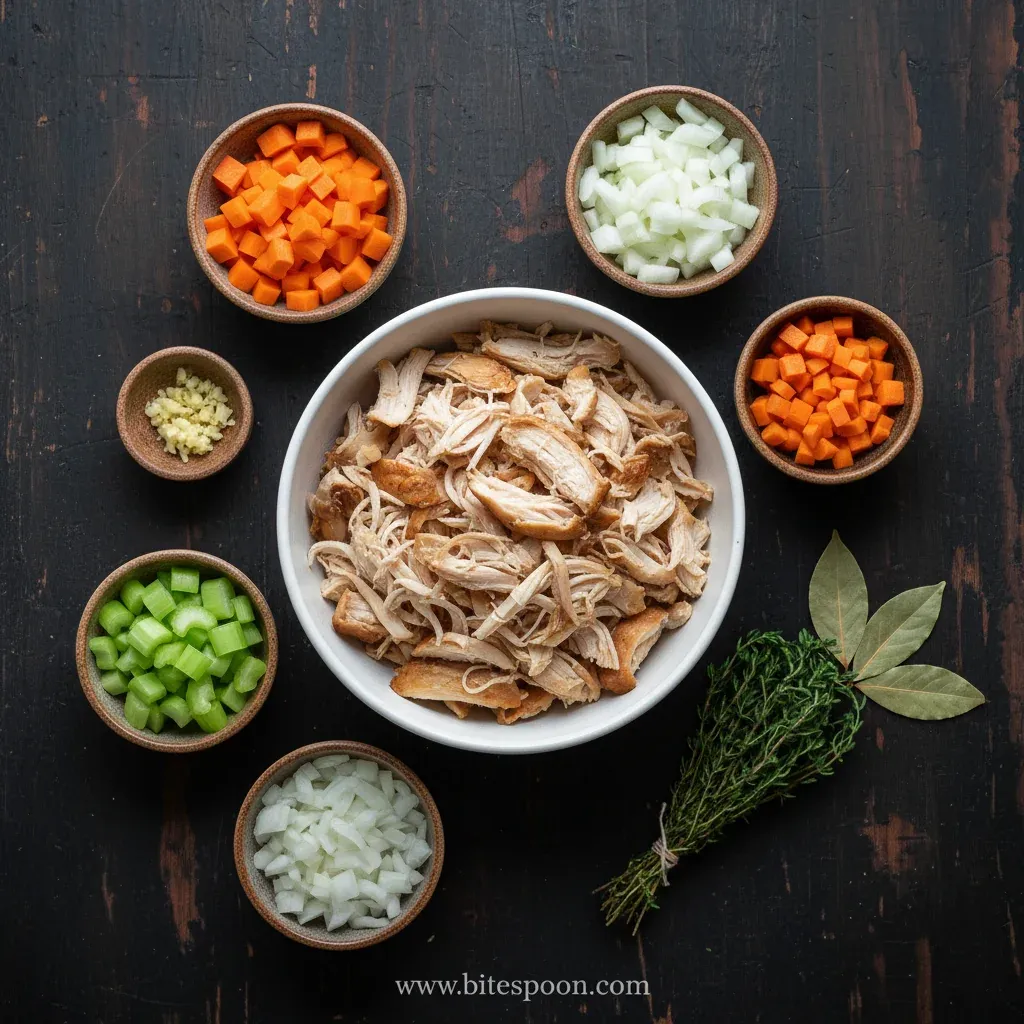
- Rotisserie chicken: 2 cups cooked shredded chicken breast. Any cooked chicken works - adjust seasoning since rotisserie chicken is usually well-seasoned
- Potatoes: Sweet potatoes or parsnips. Will change the flavor profile slightly but still delicious
- Peas: Green beans or corn. Other quick-cooking vegetables work well as substitutes
Variations
- Creamy Version: Stir in 1/2 cup of cream or coconut milk at the end for a richer, creamier soup
- Spicy Twist: Add a pinch of red pepper flakes with the garlic, or stir in some hot sauce at the end
- Extra Vegetable: Add corn, green beans, or spinach along with the peas for more vegetable variety
Storage
Store in an airtight container in the refrigerator for 3-4 days. Freeze for up to 3 months in freezer-safe containers.
Make ahead
You can chop all vegetables up to 2 days in advance and store in airtight containers in the refrigerator. The soup itself reheats beautifully.
Leftovers
Reheat gently on the stove with a splash of additional broth. The flavors improve overnight, making leftovers even better.
Serving ideas
- Serve with crusty bread for dipping
- Top with extra fresh parsley
- Add a squeeze of lemon for brightness
- Pair with a simple pasta salad for a complete meal
Allergy information
Contains none of the major allergens. Always check rotisserie chicken ingredients if concerned.
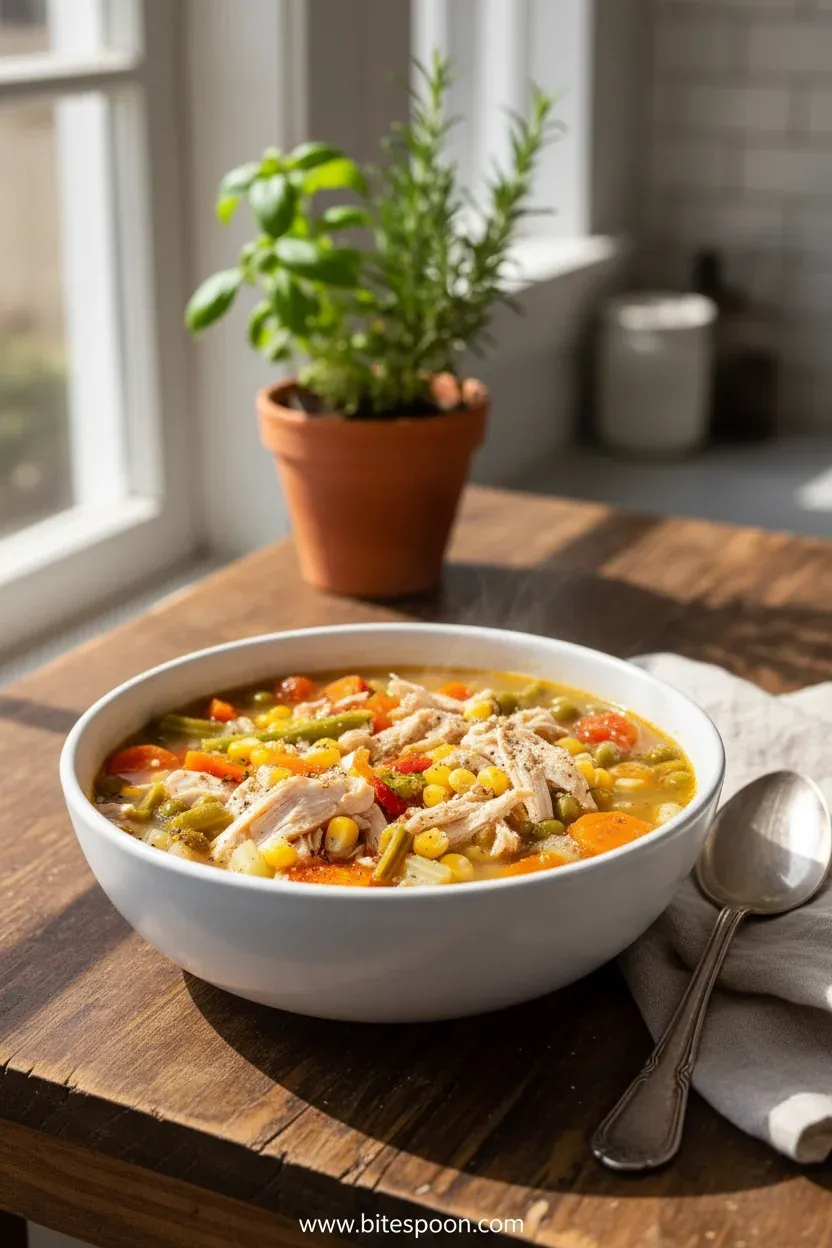
Rotisserie Chicken Vegetable Soup Recipe
A quick and comforting soup using rotisserie chicken and fresh vegetables.
- Prep time
- 15 min
- Cook time
- 25 min
- Total time
- 40 min
- Difficulty
- Easy
- Cuisine
- American
- Course
- Soup
Ingredients
Main Ingredients
Finishing Touches
Instructions
- 1
Heat the olive oil in a large pot over medium heat. Add the diced onion, carrots, and celery. Cook, stirring occasionally, until the vegetables begin to soften, about 5-7 minutes. Add the minced garlic and cook for another minute until fragrant.
- 2
Pour in the chicken broth and add the cubed potatoes, thyme, and bay leaf. Bring to a boil, then reduce heat to a gentle simmer. Cook until the potatoes are tender when pierced with a fork, about 15-20 minutes.
- 3
While the soup simmers, remove the skin from your rotisserie chicken and shred the meat into bite-sized pieces. This is so much easier when the chicken is still warm.
- 4
Once the potatoes are tender, stir in the shredded chicken and frozen peas. Cook for just 2-3 more minutes until the peas are heated through and the chicken is warm.
- 5
Remove the bay leaf and stir in the chopped parsley. Taste and season with salt and pepper as needed. Sometimes I add a squeeze of lemon juice at the end to brighten everything up.
- 6
Let the soup rest for 5 minutes before serving. This allows the flavors to come together beautifully. Serve hot with some crusty bread on the side.
Nutrition per serving
- 285 kcal
- Calories
- 28 g
- Protein
- 22 g
- Carbs
- 9 g
- Fat
Tips & notes
- Save the chicken bones to make homemade broth for next time - The soup will thicken as it cools - add more broth when reheating - Fresh herbs really elevate this soup if you have them available
Frequently asked questions
Can I use frozen vegetables?
Absolutely. Frozen mixed vegetables work well - just add them when you would add the carrots and celery. They might release more water, so you might need to simmer a bit longer to concentrate the flavors.
How long does this soup keep in the refrigerator?
It will stay fresh for 3-4 days stored in an airtight container. The flavors actually improve after a day or two as everything melds together.
Can I make this soup vegetarian?
Yes, simply omit the chicken and use vegetable broth. You could add some white beans or extra potatoes for protein and heartiness.
What if my rotisserie chicken is already seasoned?
That's perfect! The seasoning from the chicken will flavor your broth beautifully. Just taste before adding additional salt at the end.
Can I add pasta or rice to this soup?
You certainly can, but cook them separately and add to individual bowls. Pasta and rice tend to absorb too much broth if stored together.
What's the best way to reheat leftover soup?
Gently on the stovetop over medium-low heat, stirring occasionally. You may need to add a splash of broth or water as it thickens when refrigerated.

Alexa Carter
Fast food, but smarter 🔥🍽️ Bold flavors, simple steps, and meals that always hit the spot 😎