
Honestly, I've been making this broth for years now, and it's become one of those kitchen staples that just makes everything taste better. I remember when I first discovered how dried mushrooms could create such a rich base.
The essence of the dish
What makes this broth special is how it transforms simple ingredients into something deeply nourishing. It's not just liquid - it's liquid comfort that carries the wisdom of generations of cooks who understood how to build flavor from the earth's gifts.
A fun fact or historical angle
Umami was only officially recognized as the fifth taste in the early 20th century, but Japanese cooks had been cultivating it for over a thousand years through ingredients like kombu and dried fish.
Flavor or sensory focus
When you taste this broth, you'll notice a round, savory depth that lingers pleasantly. It's like the difference between hearing a single note and a full chord - there's complexity here that satisfies on a deeper level.
You Must Know
- Always soak dried mushrooms for at least 30 minutes
- Kombu should never be boiled - simmer gently
- Miso loses its benefits if cooked at high heat
- Strain thoroughly for the clearest broth
Making this broth has become one of my Sunday rituals. There's something so grounding about preparing something that will nourish meals throughout the week. I often think about how this same basic process has been done in kitchens across cultures and centuries. The simplicity of it all - water, time, and a few good ingredients - never fails to amaze me. When I use it later in the week for something like that quick Chinese stir-fried cabbage, the flavor is just so much richer than if I'd used plain water or store-bought broth.
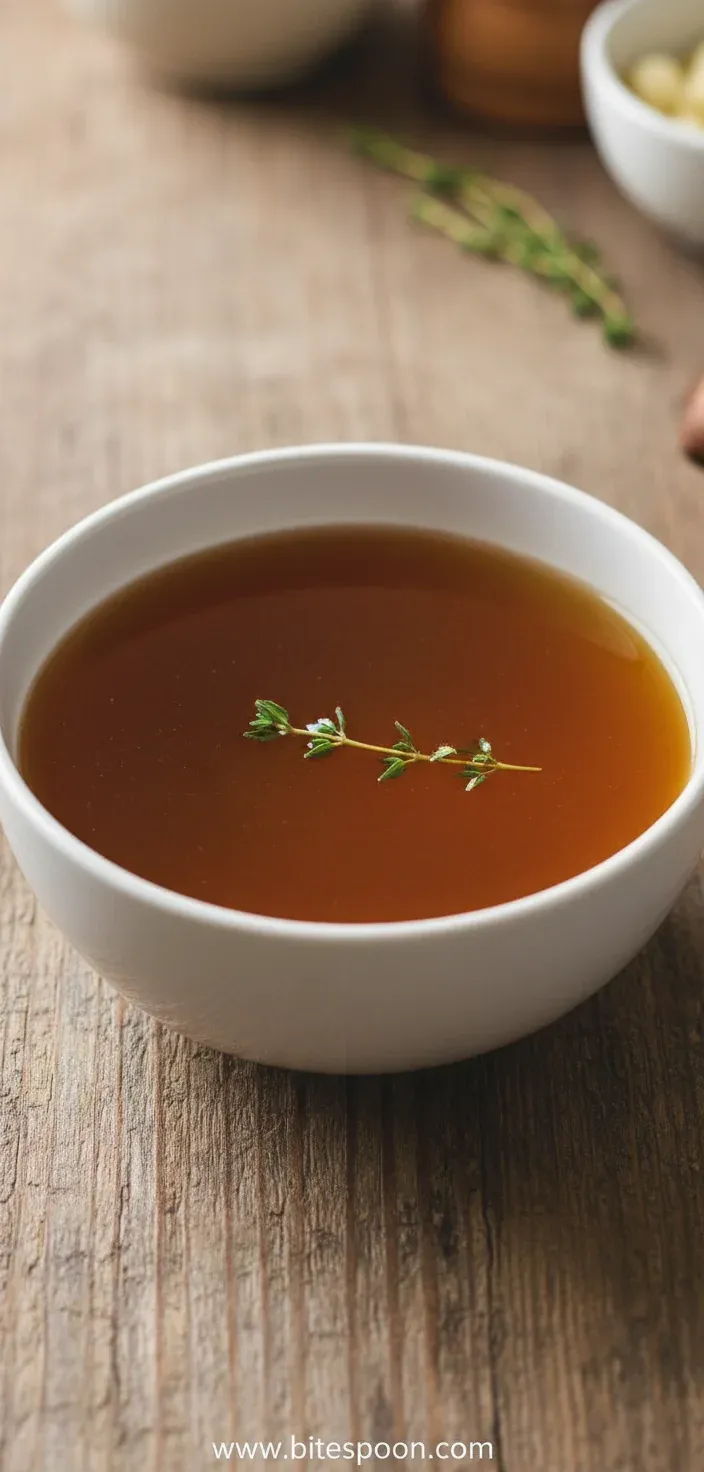
The story behind it
Umami broth has roots in traditional Japanese cooking, where kombu seaweed and dried mushrooms have been used for centuries to create deeply savory flavors. The fifth taste sensation was scientifically identified in 1908, but cooks had been harnessing its power long before. This vegan version builds on that heritage, using natural ingredients to achieve complexity without animal products.
Why You'll Love It
- Rich, savory flavor that elevates any dish
- Uses simple pantry ingredients you might already have
- Makes a big batch you can freeze for future meals
- Perfect base for soups, stews, and grain dishes
Tips for success
- Don't boil after adding miso - it destroys beneficial enzymes
- Simmer gently to extract flavors without making broth bitter
- Taste as you go - seasoning needs may vary
- Let broth cool completely before storing
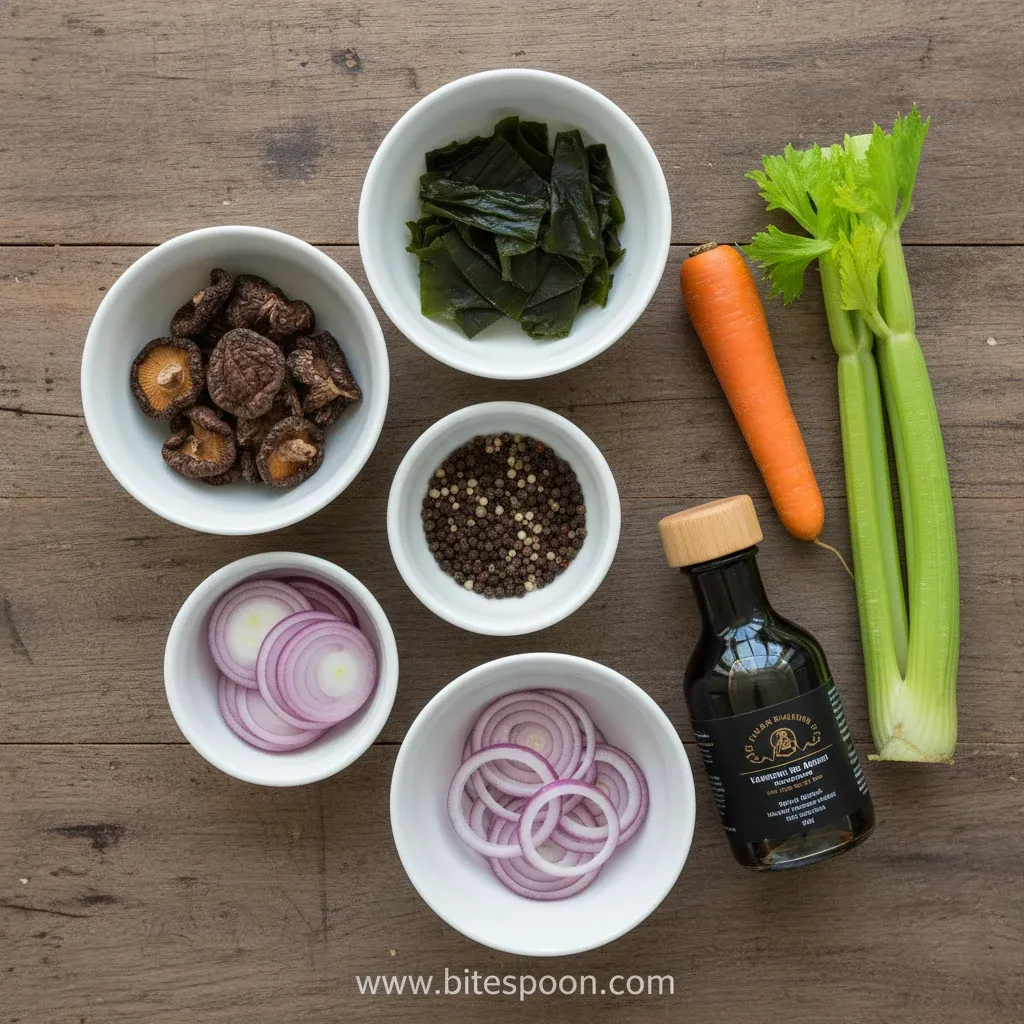
Professional secrets
- Cold water start allows gradual flavor extraction
- Kombu removal prevents sliminess while preserving flavor
- Miso blending ensures smooth incorporation
- Slow reduction concentrates umami compounds
Common mistakes to avoid
- Boiling the broth - makes it bitter
- Adding miso while broth is boiling - destroys flavor
- Not soaking mushrooms long enough - less flavor extraction
- Over-seasoning too early - flavors concentrate as broth reduces
Substitutions
- Shiitake mushrooms: Other dried mushrooms like porcini or morels. Different mushrooms will create slightly different flavor profiles
- Kombu: More mushrooms and a touch of MSG. Not traditional but creates similar umami effect
Variations
- Smoky Version: Add a small piece of smoked paprika or a dash of liquid smoke for barbecue-style depth
- Herb-Infused: Add fresh thyme, rosemary, or sage during the last 30 minutes of simmering
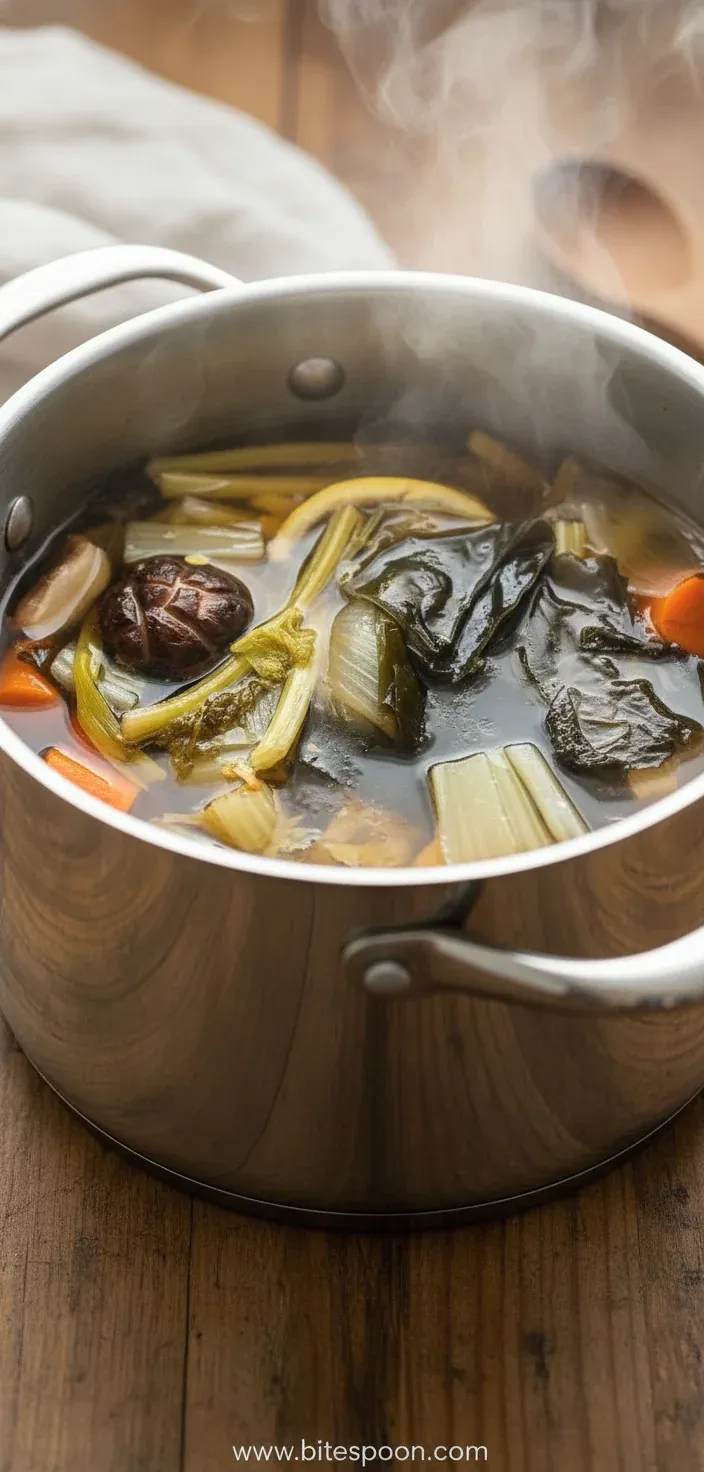
Storage
Store in airtight containers in refrigerator for up to 5 days or freeze for 3 months.
Make ahead
This broth actually improves after resting overnight in the refrigerator. Make it a day ahead for best flavor development.
Leftovers
Reheat gently on the stove. The frozen broth cubes are perfect for adding to that scrambled eggs with cabbage for breakfast.
Serving ideas
- As base for vegetable soups and stews
- Cooking liquid for grains and legumes
- Deglazing liquid for pan sauces
- Broth for sipping with a squeeze of lemon
- Base for that cabbage soup with ground beef (using plant-based alternatives)
Allergy information
Contains soy. Gluten-free if using tamari instead of soy sauce.

Vegan Umami Broth Recipe for Soups and Stews
A deeply flavorful vegan broth that transforms soups and stews with rich umami depth.
- Prep time
- 15 min
- Cook time
- 2 h
- Total time
- 2 h 15 min
- Difficulty
- Easy
- Cuisine
- Japanese
- Course
- Soup
Ingredients
Base Ingredients
Finishing Ingredients
Instructions
- 1
Place the dried mushrooms in a bowl and cover with warm water. Let them soak for 30 minutes until softened. Meanwhile, wipe the kombu with a damp cloth but don't rinse off the white residue.
- 2
In a large stockpot, combine the soaked mushrooms (with their soaking liquid), kombu, onion, garlic, and carrot. Add the cold water and bring to a very gentle simmer over medium-low heat.
- 3
Reduce heat to low and simmer very gently for 1 hour. Don't let it boil - you want just occasional bubbles breaking the surface. After 1 hour, remove and discard the kombu.
- 4
Continue simmering for another hour. The broth should reduce by about a quarter and become richly colored and fragrant.
- 5
Remove from heat and strain the broth through a fine mesh strainer lined with cheesecloth. Press gently on the solids to extract all the liquid.
- 6
In a small bowl, whisk the miso paste with a cup of the warm broth until smooth. Stir this back into the main pot along with the soy sauce.
- 7
Taste and add salt if needed. The broth is now ready to use or store. I love using it right away in something like that healthy cabbage soup for dinner.
Nutrition per serving
- 25 kcal
- Calories
- 2 g
- Protein
- 4 g
- Carbs
- 0 g
- Fat
Tips & notes
- Save the rehydrated mushrooms - they're delicious chopped and added to other dishes - The broth freezes beautifully for up to 3 months - For clearer broth, don't press too hard when straining - Adjust salt at the end since reduction concentrates flavors
Frequently asked questions
Can I use fresh mushrooms instead of dried?
Fresh mushrooms will give a different result - drier mushrooms have concentrated umami compounds. You can use them, but the flavor will be milder.
How long does this broth keep in the refrigerator?
About 5 days in an airtight container. It freezes beautifully for up to 3 months.
What can I do with the rehydrated mushrooms?
They're delicious sliced and added to stir-fries, rice dishes, or even that braised miso cabbage recipe - don't waste them!
Can I make this without soy sauce for lower sodium?
Yes, just add salt to taste at the end. The mushrooms and kombu provide plenty of savory flavor on their own.
What's the best way to freeze the broth?
I like freezing it in ice cube trays first, then transferring to bags. Perfect portions for adding to cabbage soup or sauces.
Can I use this as a base for other dishes?
Absolutely! It's wonderful in grain dishes, as a cooking liquid for vegetables, or even in that cabbage and egg stir-fry instead of water.

Alexa Carter
Fast food, but smarter 🔥🍽️ Bold flavors, simple steps, and meals that always hit the spot 😎